Your Energy Bill Is Lying to You: What a Whole-Home Electrical Audit Actually Uncovers
The Gap Between What You're Told and What You're Charged
Every month, a utility bill arrives—and every month, many American homeowners accept it without question. The numbers seem plausible. The usage graph trends in a familiar direction. And yet, something doesn't add up. You've switched to LED bulbs. You upgraded the HVAC system. You unplugged the second refrigerator in the garage. The savings your utility company projected never fully materialized.
This disconnect is more common than most people realize, and it rarely has a single, obvious explanation. Instead, it reflects a layered reality: a home's electrical system is not a static entity. It evolves, degrades, and accumulates inefficiencies over time—often in ways that no smart meter or utility portal is equipped to detect or report.
A whole-home electrical audit changes that equation entirely.
What a Whole-Home Electrical Audit Actually Involves
A professional electrical audit is not the same as the energy assessment a utility company might offer as part of a rebate program. Those assessments tend to focus narrowly on insulation, appliance ratings, and general consumption patterns. A full electrical audit, conducted by a licensed electrician, goes considerably deeper.
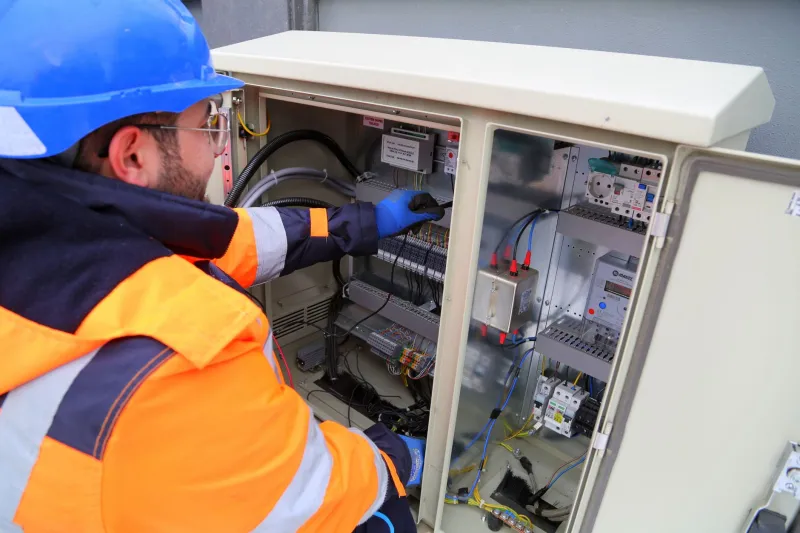
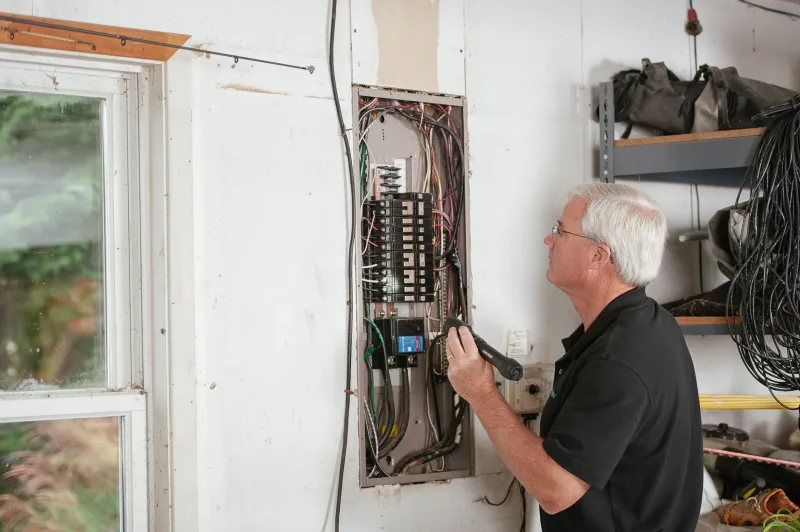
The process typically begins at the service panel. An experienced electrician will assess the panel's capacity, the condition of individual breakers, and whether the load distribution across circuits reflects how the home is actually being used. From there, the audit expands outward—covering branch circuits, outlet conditions, wiring age and type, grounding integrity, and the performance characteristics of major loads.
Critically, the audit also involves measurement. Using clamp meters and circuit analyzers, a qualified technician can determine the actual draw of individual circuits under real-world operating conditions. This is where discrepancies between expected and actual consumption often become undeniable.
Phantom Loads and the Loads Beyond Phantom Loads
Most homeowners have heard the term "phantom load" or "vampire power"—the energy consumed by devices in standby mode. It's a real phenomenon, and it does contribute to elevated bills. But focusing exclusively on standby consumption misses a broader category of electrical inefficiency that audits are uniquely positioned to uncover.
Consider the following scenarios, each of which a professional audit can identify:
Degraded wiring connections. Loose or oxidized connections within outlets, junction boxes, or the panel itself create resistance. Resistance generates heat—and heat represents wasted energy. A circuit that should deliver power cleanly may instead be converting a portion of that power into heat before it ever reaches the intended load.
Undersized or overloaded circuits. When circuits regularly operate near their rated capacity, the conductors themselves run warmer than optimal. This thermal inefficiency is rarely catastrophic in the short term, but it adds measurable consumption over time—and it accelerates the degradation of insulation and connections.
Legacy equipment drawing disproportionate power. Older HVAC systems, water heaters, and refrigerators often consume significantly more electricity than their rated specifications suggest, particularly as components age. An audit that captures actual draw—rather than relying on nameplate data—can reveal appliances that are quietly overperforming in the worst possible sense.
Improper grounding or neutral issues. In some cases, grounding deficiencies or neutral conductor problems can create circulating currents that register on your meter without performing any useful work in your home. These are subtle, technically complex issues that a utility's smart meter is not designed to distinguish from normal consumption.
The Questions Your Utility Company Won't Help You Ask
Utility companies are in the business of selling electricity. While most operate under regulatory frameworks that incentivize some degree of efficiency promotion, their core interest is not in helping you identify why your consumption is higher than it should be. Their data—interval readings, usage comparisons, seasonal trends—is useful context, but it is not diagnostic.
A professional electrical audit empowers homeowners to move beyond that data and ask more precise questions:
- Which specific circuits are drawing more power than their connected loads should require?
- Is the service entrance and metering equipment functioning correctly, and has it been inspected recently?
- Are there any wiring configurations in this home that could cause consumption to register inaccurately?
- Does the panel's current configuration reflect the home's actual load profile, or has it been modified piecemeal over the years without proper assessment?
These are not questions a utility representative can answer. They require someone with direct access to your electrical system and the instruments to measure it.
When the Investment in an Audit Pays for Itself
The cost of a professional electrical audit varies depending on home size, system complexity, and regional labor rates. For most American homes, the investment falls within a range that can be recovered within one to two years if the audit surfaces meaningful inefficiencies—and it frequently does.
The return on investment becomes particularly compelling in the following circumstances:
Older homes. Properties built before the 1980s often contain wiring, panels, and connections that were never designed for contemporary electrical loads. The accumulated wear on these systems creates inefficiencies that compound over time.
Homes that have undergone significant renovations. Additions, kitchen remodels, and finished basements frequently involve electrical modifications that, if not executed with the full system in mind, can create load imbalances and circuit conditions that affect overall efficiency.
Households experiencing unexplained bill increases. If your consumption has risen without a corresponding change in behavior or occupancy, an audit is one of the most direct ways to identify the cause.
Homeowners preparing for major upgrades. Before installing an EV charger, solar array, whole-home generator, or battery storage system, an audit establishes a clear baseline and ensures the existing infrastructure can support the planned additions without hidden inefficiencies undermining the investment.
What Comes After the Audit
The value of a whole-home electrical audit lies not just in the findings but in the actionable path it creates. A comprehensive audit report should identify specific deficiencies, prioritize them by their impact on safety and efficiency, and provide a clear framework for remediation.
Some findings will be straightforward: a loose connection tightened, an outdated outlet replaced, a circuit redistributed. Others may point toward more substantial work—a panel upgrade, a rewiring project, or the replacement of aging infrastructure that has been operating on borrowed time.
In either case, the homeowner gains something the utility company's monthly statement never provides: an honest, technically grounded picture of what their electrical system is actually doing. That clarity is the foundation for every informed decision that follows—from how to budget for upgrades to how to negotiate with contractors to how to evaluate the claims of any vendor promising to cut your energy costs.
The Bottom Line
Your energy bill reflects what your meter recorded. It does not reflect whether that consumption was necessary, efficient, or the result of a system operating as it should. Those distinctions require a different kind of examination—one that goes inside the walls, behind the panel, and through every circuit in your home.
A professional whole-home electrical audit is that examination. For homeowners who have ever looked at a utility bill and sensed that something doesn't add up, it is often the most direct route to an answer.