Grounded in Reality: What Happens When Your Home's Most Critical Safety System Is Quietly Failing
The System You Cannot See Is the One That Matters Most
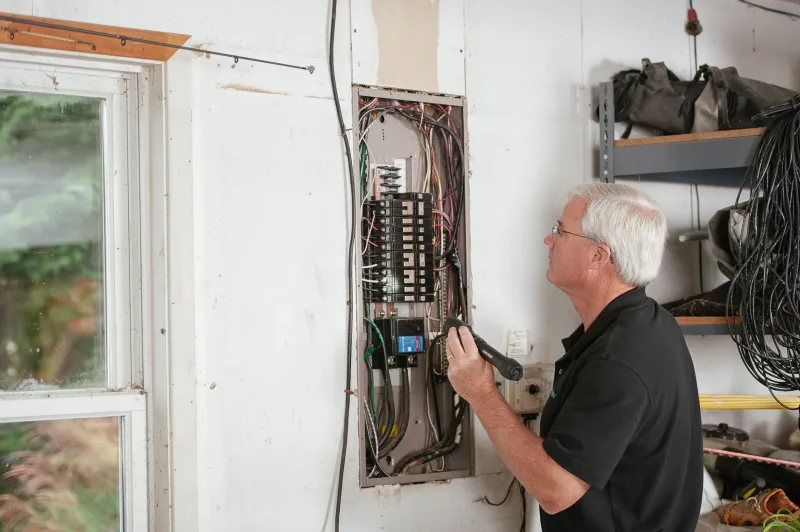
Open any electrical panel in America and you will find a tangle of wires, breakers, and terminals that most homeowners would rather not touch or think about. But behind the panel, running through walls, and driven deep into the earth beneath your foundation, there exists a system that receives almost no attention until the day it fails in spectacular—and sometimes fatal—fashion.
That system is your home's electrical grounding network.
Unlike a flickering light or a tripping breaker, a failing ground gives you almost no warning. It operates silently, invisibly, and continuously. When it functions correctly, you never know it exists. When it does not, the consequences range from damaged appliances to electrical fires to electrocution. For the vast majority of American homeowners, grounding remains one of the least understood yet most consequential components of their entire electrical infrastructure.
What Grounding Actually Does—And Why It Exists
The term "grounding" is frequently misused and misunderstood, even among people who consider themselves reasonably knowledgeable about home systems. At its core, electrical grounding provides a deliberate, low-resistance path that directs excess or fault current safely into the earth rather than through a person, an appliance, or a structural element of your home.
Imagine a scenario in which a wire inside your washing machine frays and makes contact with the metal exterior of the unit. Without a proper ground, that machine becomes energized. Anyone who touches it while standing on a wet floor completes the circuit—through their body. With a properly installed and functioning ground, that fault current is immediately redirected away from the appliance's surface and discharged harmlessly into the ground rod buried outside your home.
Grounding also stabilizes voltage levels throughout your electrical system. Fluctuations and transient surges—caused by lightning strikes, utility switching events, or large appliances cycling on and off—are far more destructive in an ungrounded or poorly grounded home. Sensitive electronics, medical equipment, and modern smart home devices are particularly vulnerable to these irregularities.
Finally, grounding plays a critical role in enabling your circuit breakers and GFCI outlets to function as intended. These protective devices depend on detecting differences in current flow to trip and interrupt a circuit. A compromised ground can render these safeguards far less responsive, leaving you with a false sense of protection.
Older Homes, Older Problems
If your home was built before 1960, there is a meaningful probability that it was wired with a two-wire system—meaning no ground wire at all. Homes constructed between the 1960s and the 1980s may have been grounded using metal conduit or plumbing pipes, methods that were once considered acceptable but are now understood to be unreliable over time.
The problem with aging grounding systems is not merely that they were built to older standards. It is that decades of corrosion, physical movement, renovation work, and deferred maintenance have degraded whatever protective capacity they once had. A ground rod that was properly installed forty years ago may now be so corroded that it offers negligible conductivity. Connections that were tight and secure when a previous owner lived in the home may have loosened or corroded entirely.
Newer homes are not automatically exempt from grounding concerns, either. Improper installation during construction, shortcuts taken during renovation, or additions wired without permits and professional oversight can introduce grounding deficiencies into homes that are only a decade old.
Warning Signs Your Grounding System May Be Failing
Because grounding problems are largely invisible, homeowners must learn to recognize the indirect signals that something is wrong. The following indicators warrant immediate professional evaluation:
Tingling or mild shock sensations when touching appliances, faucets, or metal surfaces in your home are among the most direct warning signs. Even a faint tingle should be treated as a serious alert.
Frequent appliance failures or shortened equipment lifespans can indicate that voltage irregularities—which a functional ground would otherwise suppress—are degrading your devices over time.
Two-prong outlets throughout your home are a reliable indicator that the original wiring predates modern grounding requirements. The third prong on a standard outlet is the ground connection. Its absence is not merely inconvenient—it is a structural safety deficiency.
GFCI outlets that trip without apparent cause may be responding to leakage currents that a compromised ground is failing to handle properly.
Flickering lights or unexplained voltage fluctuations can reflect grounding instability, particularly when they occur in conjunction with appliances cycling on or off.
Burning smells or discoloration around outlets and switches should always prompt immediate professional inspection, but they may also point to underlying grounding issues that are allowing stray current to travel through unintended paths.
The Real Cost of Doing Nothing
Americans are accustomed to deferring home maintenance until a problem becomes impossible to ignore. With electrical grounding, that approach carries risks that are categorically different from a leaky faucet or a sticking door.
The National Fire Protection Association consistently identifies electrical failures and malfunctions as one of the leading causes of residential fires in the United States. A significant portion of those failures involve faults that a properly functioning ground would have safely resolved before any fire could ignite.
Beyond fire risk, the financial consequences of poor grounding compound quietly over time. When stray currents and voltage irregularities are allowed to pass freely through your home's wiring, the cumulative damage to appliances, HVAC systems, entertainment electronics, and smart home infrastructure can represent thousands of dollars in premature replacements—costs that most homeowners never connect back to their electrical system.
And then there is the human cost. Electrocution from household current remains a preventable tragedy in American homes every year. In virtually every case, a properly grounded system would have either prevented the fault entirely or triggered a protective device fast enough to interrupt the circuit before injury occurred.
What a Professional Grounding Assessment Involves
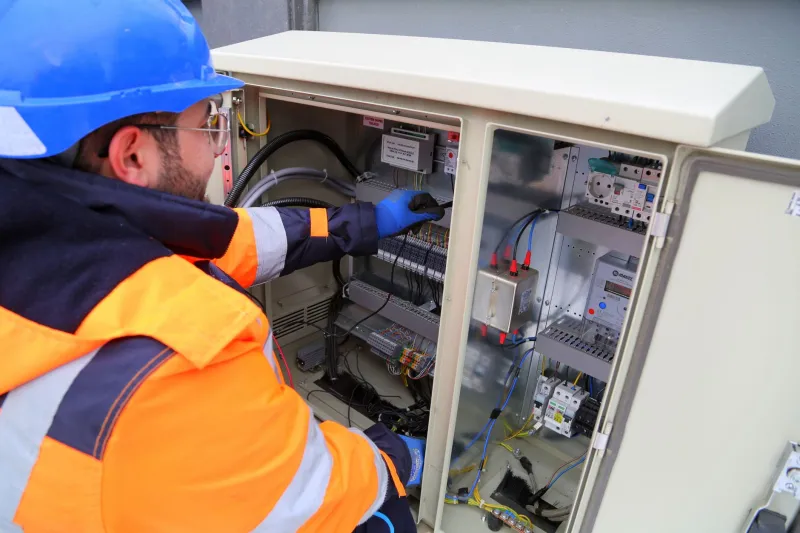
A qualified electrician evaluating your home's grounding system will examine several key components: the condition and continuity of the grounding electrode system (including the ground rod or rods driven into the earth), the integrity of the grounding conductors running through your home, the proper bonding of metal water and gas pipes, and the grounding connections at every outlet, panel, and subpanel.
In many older homes, the most practical upgrade path involves installing new ground rods, running updated grounding conductors to ungrounded outlets, and adding GFCI protection in areas where a full rewire is not immediately feasible. In homes undergoing significant renovation, a complete grounding upgrade performed in conjunction with other electrical work is often the most cost-effective approach.
An Investment That Pays in Ways You Cannot Easily Measure
Grounding upgrades rarely generate the excitement of a new smart panel or an EV charging installation. They are not visible improvements. They do not add square footage or curb appeal. But they represent something more valuable than most cosmetic upgrades: the confidence that your home's electrical system will respond correctly when a fault occurs, rather than allowing that fault to travel through your walls, your appliances, or your family.
At SK Electricals, we have seen firsthand what inadequate grounding looks like in the field—and we have seen the difference a properly executed grounding upgrade makes in protecting both property and lives. If you are uncertain about the state of your home's grounding system, the appropriate time to find out is before an event forces the answer upon you.