Tenant Complaints Are Not Nuisances—They Are Fire Alarms in Disguise
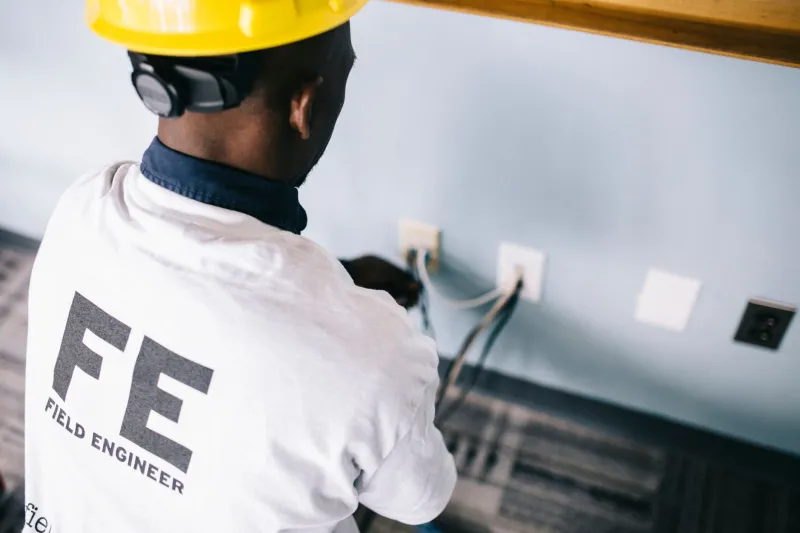
Landlords across the United States receive hundreds of thousands of maintenance requests every year. A significant portion of those requests involve electrical issues—flickering lights, outlets that feel warm to the touch, circuit breakers that trip unexpectedly, or a faint buzzing sound coming from a wall panel. The instinct for many property owners is to classify these as minor annoyances, schedule a patch job when time allows, or simply wait to see if the problem resolves itself.
That instinct is dangerous, and in many cases, it is the instinct that precedes a fire.
What Tenants Notice First Is Rarely the Whole Problem
When a tenant reports a flickering light, they are describing a symptom. The actual condition generating that symptom could be a loose connection at a junction box, a failing circuit breaker, deteriorating wiring insulation, or an overloaded circuit that has been running at capacity for months. None of those root causes are visible from the light fixture itself. None of them announce their severity through the symptom alone.
The same principle applies to warm outlets. An outlet that generates noticeable heat is experiencing resistance somewhere in the circuit—resistance that produces heat, and heat that, under the right conditions, ignites surrounding materials. Behind drywall, that heat has nowhere to go. Wood framing, insulation batts, and decades of dust accumulation are all excellent fuel sources.
Buzzing sounds from walls or panels are similarly deceptive. A loose wire, an arcing connection, or a breaker that is failing to trip properly can all produce audible vibration. These sounds are not cosmetic defects. They are the electrical system communicating mechanical failure.
The Legal Exposure Landlords Are Creating by Waiting
Under the implied warranty of habitability—a legal doctrine recognized in virtually every U.S. state—landlords are obligated to maintain rental properties in a condition fit for human occupancy. Electrical systems are explicitly included in that standard. A property with documented, unresolved electrical complaints does not meet that standard, and the documentation trail matters enormously.
When a tenant submits a written complaint and a landlord fails to respond within a reasonable timeframe, that paper trail becomes evidence. In the event of a fire, an injury, or a death, that evidence transforms a civil dispute into a case involving gross negligence. Settlements and jury awards in residential fire cases routinely reach six and seven figures, and insurance carriers are increasingly scrutinizing whether landlords responded to prior complaints before agreeing to cover losses.
Several states, including California, New York, and Illinois, have enacted tenant protection laws that allow renters to withhold rent, terminate leases, or pursue damages specifically when electrical hazards are reported and ignored. The financial exposure from a single ignored complaint can exceed the cost of a complete panel replacement many times over.
Why Insurance Coverage Is Not the Safety Net Landlords Assume It Is
Many landlords operate under the assumption that their property insurance will absorb the financial impact of an electrical fire. That assumption deserves scrutiny. Insurance policies covering rental properties typically include exclusions or limitations tied to negligence, deferred maintenance, and code violations. If an investigation following a fire reveals that the property had known electrical deficiencies—and that the landlord was made aware of them through tenant complaints—the carrier may deny the claim or significantly reduce the payout.
Furthermore, standard landlord policies do not automatically cover tenant personal property losses or tenant medical expenses. Those claims arrive separately, through liability coverage, and they are where the truly significant financial exposure lives. A tenant who suffers injuries in an electrical fire, or who loses irreplaceable belongings, has standing to pursue damages that no standard policy fully absorbs.
The Complaints That Deserve Immediate Professional Attention
Not every electrical complaint carries identical urgency, but the following categories should be treated as requiring licensed electrician inspection within 24 to 48 hours of receipt:
- Outlets or switch plates that are warm or discolored. Heat at a cover plate indicates resistance in the circuit—this is not normal operation.
- Flickering lights that persist across multiple rooms or fixtures. Isolated bulb issues differ from systemic voltage fluctuation, which points to wiring or panel problems.
- Burning or acrid smells near outlets, panels, or appliances. This is insulation degrading under heat. It requires immediate attention.
- Breakers that trip repeatedly on the same circuit. A breaker that cannot hold a load is either failing or protecting a circuit that has exceeded its safe capacity.
- Buzzing, humming, or crackling sounds near the electrical panel. These sounds indicate arcing, which is a direct precursor to fire.
What a Professional Inspection Actually Involves
When a licensed electrician responds to a rental property complaint, the inspection should go beyond the reported symptom. A thorough assessment will examine the condition of the panel, the integrity of connections at outlets and junction boxes, the grounding system, the age and type of wiring throughout the affected area, and whether any previous repairs were performed without permits or to substandard specifications.
In older rental stock—particularly properties built before 1980—aluminum wiring, Federal Pacific or Zinsco panels, and knob-and-tube wiring are still present in significant numbers. These are not minor issues. They are systemic conditions that require comprehensive remediation, and tenant complaints are frequently the first indication that these legacy systems are beginning to fail under modern electrical loads.
The Cost Comparison That Makes the Case
A licensed electrician's service call to diagnose and repair a loose connection or a failing outlet typically costs between $150 and $400 depending on location and scope. A panel replacement for a standard residential rental unit runs between $1,500 and $4,000. A full rewire of an older property may reach $8,000 to $15,000.
A single residential fire claim, by contrast, averages over $20,000 in structural damage alone, according to data from the National Fire Protection Association. When liability claims, tenant displacement costs, legal fees, and insurance premium increases are included, the total financial impact routinely exceeds $100,000. The math is not complicated.
Responding to tenant electrical complaints is not a customer service gesture. It is risk management. It is legal compliance. And for the tenants living inside those properties, it is a matter of physical safety that no responsible property owner should treat as optional.