The Cold Snap Collapse: Why Heat Pump Homes Are Failing Their Owners on the Coldest Winter Nights
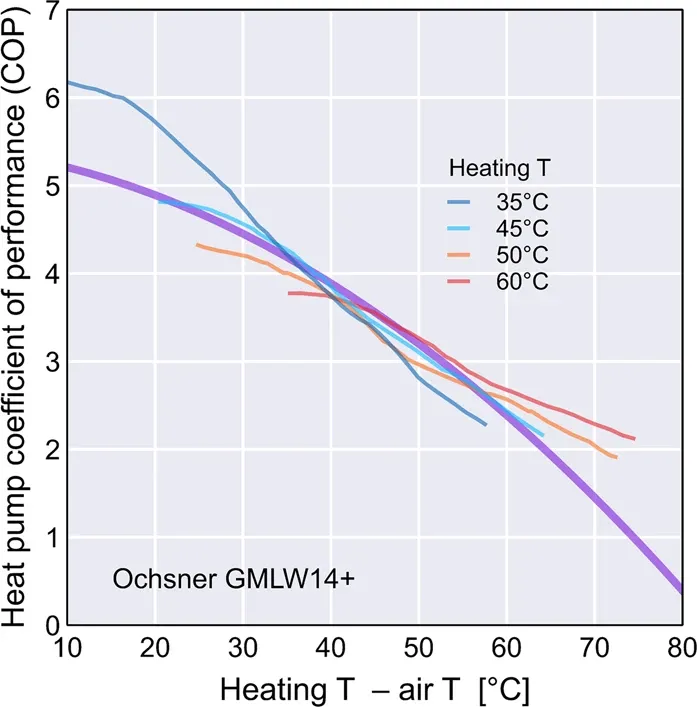
Photo: Authors of the study: Pietro P. Altermatt, Jens Clausen, Heiko Brendel, Christian Breyer, Christoph Gerhards, Claudia Kemfert, Urban Weber & Matthew Wright, CC BY 4.0, via Wikimedia Commons
The appeal of a heat pump system is well documented. In moderate climates and average winter conditions, the efficiency advantages over traditional resistance heating are real, measurable, and genuinely significant. Utility companies across the country have promoted heat pump adoption for years. Federal tax incentives have made the equipment more accessible. The market has responded, and millions of American homes now rely on heat pump systems as their primary source of winter warmth.
But there is a scenario that the efficiency charts do not adequately address—one that plays out with increasing frequency during the kind of extended cold snaps that have become a fixture of American winters from the Midwest to the Southeast. When outdoor temperatures fall below the range where a heat pump can efficiently extract heat from outside air, the system does not simply work harder. It hands control to a backup heating element that operates on an entirely different electrical logic. And for a significant number of homes, that transition is the beginning of a serious problem.
Understanding the Two-Stage Reality of Heat Pump Operation
A heat pump in standard operation is a remarkably efficient device. It moves heat rather than generating it, drawing from the thermal energy present in outdoor air even in relatively cold conditions. Most modern heat pump systems operate efficiently down to approximately 35 to 40 degrees Fahrenheit. Below that threshold—or during periods of unusually high heating demand—the system activates supplemental electric resistance heating strips, often referred to as emergency heat or auxiliary heat.
This is where the electrical calculus changes dramatically.
A heat pump compressor operating in mild conditions may draw 15 to 20 amps at 240 volts—a significant but manageable load. The electric resistance backup strips that activate in cold conditions can draw an additional 20 to 60 amps, depending on the system's capacity. The combined load during a cold snap can reach 80 amps or more for a single heat pump system in a moderately sized home.
For a home with a 100-amp or 150-amp service panel—and tens of millions of American homes fall into this category—that single heating system may represent the majority of available electrical capacity. Add the baseline draw of a modern home's lighting, refrigeration, water heating, and electronics, and the arithmetic becomes uncomfortable very quickly.
Why the Warnings Go Unheeded
Utility companies and HVAC contractors are generally aware of this dynamic. Warning language appears in heat pump installation documentation, and utility representatives sometimes flag it during energy efficiency consultations. Yet the warnings consistently fail to translate into action for a predictable set of reasons.
First, the problem is invisible until it occurs. A homeowner who installs a heat pump in October and experiences no issues through November and December has no experiential reason to anticipate a January failure. The system performed. The efficiency gains materialized. The concern seems theoretical.
Second, the installation process does not always include a formal electrical assessment. HVAC contractors are not electricians. They can install the equipment to manufacturer specifications without evaluating whether the home's electrical panel can sustain the combined load during extreme conditions. Unless an electrician is explicitly brought into the process, that evaluation may never happen.
Third, the cold snaps that trigger backup resistance heating are, by definition, infrequent. A home's electrical system may handle three winters without incident before a sustained period of subfreezing temperatures creates the conditions for failure. By that point, the homeowner has long since stopped thinking about panel capacity.
What Failure Actually Looks Like
The failures that occur when a heat pump system overwhelms an undersized panel are not subtle. Homeowners report breakers tripping repeatedly throughout the night, sometimes every 30 to 45 minutes, as the system cycles on and demands more current than the panel can sustain. In some cases, the main breaker trips, cutting power to the entire home. In others, individual circuits fail while the heating system continues operating at reduced capacity—leaving rooms dark or appliances offline while the thermostat climbs toward its target temperature.
In the most serious cases, sustained overloading of an aging panel produces heat buildup at the breaker connections—a condition that poses a genuine fire risk and is not always immediately apparent. Breakers that trip are doing their job. Breakers that fail to trip under overload conditions, or that develop loose connections under repeated thermal stress, are a different category of concern entirely.
The timing compounds the severity. Cold snaps do not observe business hours. The electrical failures they trigger occur at 2 a.m. on a Sunday in January, when temperatures outside are in the single digits and the options for professional assistance are limited.
A Practical Checklist for Heat Pump Households
If your home uses a heat pump system with electric resistance backup, the following steps will significantly reduce your exposure to cold-weather electrical failure.
Verify your panel capacity before the heating season. A licensed electrician can calculate the total connected load of your home's electrical systems and determine whether your panel has adequate headroom for simultaneous heat pump and resistance heating operation. This assessment takes less than an hour and provides a definitive answer.
Know your backup heat draw. Your heat pump's installation documentation or the equipment label on the air handler will specify the amperage of the resistance heating elements. If that number is not familiar to you, locate it before winter arrives.
Consider a panel upgrade if warranted. A 200-amp service panel is the current standard for new residential construction for good reason. Homes with 100-amp or 150-amp service that rely on heat pump systems with electric backup heating should have an honest conversation with a licensed electrician about whether an upgrade is appropriate.
Do not ignore repeated breaker trips. A breaker that trips once under unusual conditions is performing its protective function. A breaker that trips repeatedly under normal heating operation is communicating a load problem that will not resolve itself.
Schedule an inspection after any cold snap that produced electrical symptoms. Thermal stress on breakers and panel connections is cumulative. A panel that survived last winter's cold snap may be measurably less capable of surviving this one.
The Broader Context
The rapid adoption of heat pump technology across the United States represents a genuine step toward residential energy efficiency. The electrical infrastructure supporting that adoption, however, has not kept pace in every home. Panels installed in the 1970s, 1980s, and 1990s were sized for the homes of those decades—not for the heating systems of today.
The solution is not to avoid heat pump technology. It is to ensure that the electrical system supporting it is adequate for the full range of conditions that system will encounter. That assessment is straightforward, the remedies are well understood, and the cost of addressing the issue proactively is a fraction of the cost of managing the consequences when it fails on the coldest night of the year.