The Spare Bedroom That Became a Fire Hazard: Electrical Risks in the Modern Home Office
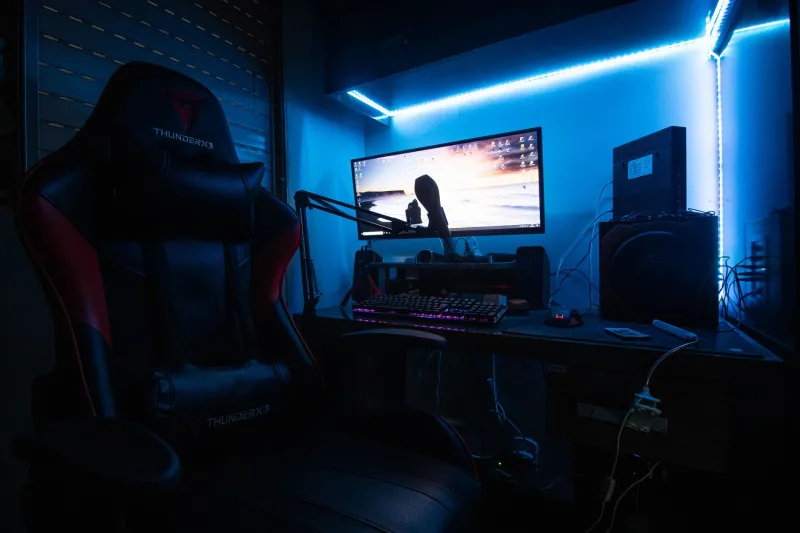
The shift to remote work that accelerated during the pandemic years fundamentally changed how Americans use their homes. Spare bedrooms, dining room corners, basement alcoves, and converted closets became daily workspaces almost overnight. Furniture was rearranged, monitors were mounted, and cable management became a weekend project for millions of households that had never previously needed to think about it.
What most of those households did not think about—and what almost none of the remote work lifestyle content addressed—was whether the electrical system in the chosen room was capable of safely supporting what was being asked of it.
Four years on, the improvised electrical arrangements created during that period remain in place in homes across the country, and they represent a genuine fire risk that is easy to overlook precisely because it has been present long enough to feel normal.
Why Bedrooms Were Never Designed for Office Loads
Residential building codes prior to the widespread adoption of home offices did not require bedroom circuits to accommodate the continuous, sustained loads associated with professional workstations. A typical bedroom circuit in a home built before 2000 is a 15-amp, 120-volt general-purpose circuit shared with lighting and other outlets in the room. It was designed to support a lamp, a clock, a phone charger, and perhaps a television.
A modern home office setup tells a very different story. A desktop computer with a dedicated monitor draws between 150 and 300 watts under load. Add a second monitor, a laser printer, a docking station, external hard drives, a desk lamp, a space heater for the winter months, and a phone and tablet charging simultaneously, and the load on that single 15-amp circuit can easily approach or exceed its rated capacity.
A 15-amp circuit at 120 volts can safely deliver 1,800 watts of continuous power—but the National Electrical Code recommends loading circuits to no more than 80 percent of their rated capacity for continuous loads, which brings the practical threshold down to 1,440 watts. Many home office setups exceed that threshold without their occupants ever being aware of it.
The Extension Cord Problem That Everyone Has and Nobody Discusses
Extension cords are the most visible symptom of a home office electrical arrangement that has outgrown its infrastructure. Walk through the average American home office and you will find them: orange or brown cords running under rugs, tucked behind desks, looped through furniture legs, and disappearing into the wall at a single outlet.
Extension cords are designed for temporary use. The NEC and every major fire safety authority in the United States—including the U.S. Fire Administration and the National Fire Protection Association—are explicit on this point. Running an extension cord as a permanent power supply is a code violation in any occupied space, and it is a fire hazard for reasons that are well-documented.
Extension cords generate heat under load. When they are covered by rugs or furniture, that heat cannot dissipate. When they are connected to power strips that are themselves connected to other power strips—a configuration known as daisy-chaining—the cumulative load can far exceed the rating of any individual component in the chain. The cord does not trip a breaker when it overheats. It simply gets hotter until something ignites.
The U.S. Fire Administration estimates that extension cord fires cause approximately 3,300 residential fires annually in the United States, resulting in 50 deaths, 270 injuries, and over $82 million in property losses. Those numbers existed before the mass conversion of bedrooms into permanent workspaces. They have not improved since.
Overloaded Outlets and the Damage You Cannot See
Beyond extension cords, the outlets themselves in many repurposed home office rooms are showing the strain of loads they were not designed to carry. An outlet that is warm to the touch, that has discolored cover plates, or that requires a firm push to seat a plug securely is an outlet that has been mechanically and thermally stressed beyond its design parameters.
Behind that outlet, the connections to the wiring may have loosened under repeated thermal cycling—the expansion and contraction that occurs as a circuit heats under load and cools when the load is removed. Loose connections are a primary cause of residential electrical fires because they create resistance at the connection point, and resistance generates heat. That heat builds inside the wall cavity, invisible and undetected, until it reaches ignition temperature.
In older homes with aluminum branch circuit wiring—a material used extensively in residential construction during the 1960s and 1970s—thermal cycling and connection loosening are accelerated. Aluminum expands and contracts at a different rate than the copper connections it meets at outlets and switches, and that differential movement degrades connections over time in ways that standard visual inspection cannot detect.
Code Compliance in a Home Office: What the Rules Actually Require
The NEC, in its current and recent editions, includes specific requirements for home office spaces that many homeowners and even some contractors are not fully familiar with. Dedicated circuits for home office equipment, adequate outlet placement to eliminate the need for extension cords, AFCI (arc-fault circuit interrupter) protection for bedroom circuits, and proper grounding are all either required or strongly recommended depending on the jurisdiction and the applicable code edition.
AFCI breakers deserve particular attention in this context. Unlike standard breakers that respond to overloads and short circuits, AFCI breakers detect the specific electrical signature of arcing faults—the dangerous sparking that occurs at loose or damaged connections. The NEC has required AFCI protection for bedroom circuits since 2002, and subsequent editions have expanded that requirement. Homes built before those requirements took effect may not have AFCI protection in the rooms now serving as home offices, and retrofitting it is both affordable and highly effective.
Permanent Solutions That Eliminate the Risk
The improvised electrical arrangements in most home offices are not difficult to correct. The solutions are straightforward, they are permanent, and they are significantly less expensive than the consequences of not addressing them.
Dedicated circuits eliminate the shared-load problem entirely. A licensed electrician can run a new 20-amp circuit directly from the panel to the home office, providing dedicated capacity for office equipment without drawing from lighting or other general-purpose circuits in the room.
Additional outlet installation eliminates the need for extension cords by placing receptacles where the equipment actually is. The NEC's general requirement that no point along a wall should be more than six feet from an outlet was written for living spaces, not workspaces. A home office may need significantly more outlet positions than the code minimum.
AFCI breaker installation adds a critical layer of protection for circuits that were installed before the requirement existed. The cost of an AFCI breaker replacement is modest—typically $40 to $80 per circuit for the device itself, plus installation labor—and the protection it provides is substantial.
Surge protection at the panel or outlet level protects sensitive computer equipment from voltage spikes that can damage hardware and, in severe cases, create fire conditions at the point of connection.
The home office is not a temporary arrangement for most American households anymore. It is a permanent feature of how people live and work. The electrical infrastructure supporting it should be treated with the same permanence—and the same professional attention—as any other critical system in the home.