Overloaded and Overwhelmed: Why Your Breaker Panel Was Never Built for the Way You Live Today
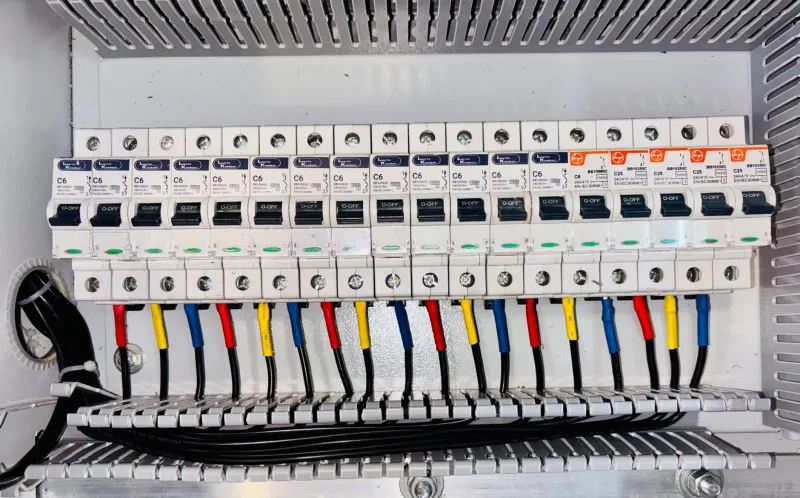
There is a quiet crisis running behind the drywall of millions of American homes. It does not announce itself with smoke or sparks—at least not immediately. It announces itself in tripped breakers, dimming lights, appliances that underperform, and, in the worst cases, electrical fires that investigators trace back to a panel that simply could not keep pace with the demands placed on it.
The central electrical panel—often called the breaker box—is the command center of your home's power distribution. Everything you plug in, switch on, or charge flows through it. And for homes built in the 1990s or earlier, that panel was sized for a world that looked nothing like the one most families occupy today.
What 200 Amps Looked Like Then Versus Now
A 100- or 150-amp service panel was considered generous for a single-family home in the 1980s and early 1990s. The reasoning was sound at the time: a household's electrical load consisted primarily of lighting, a refrigerator, a washer and dryer, central HVAC, and perhaps a television or two. The math worked.
That math no longer applies.
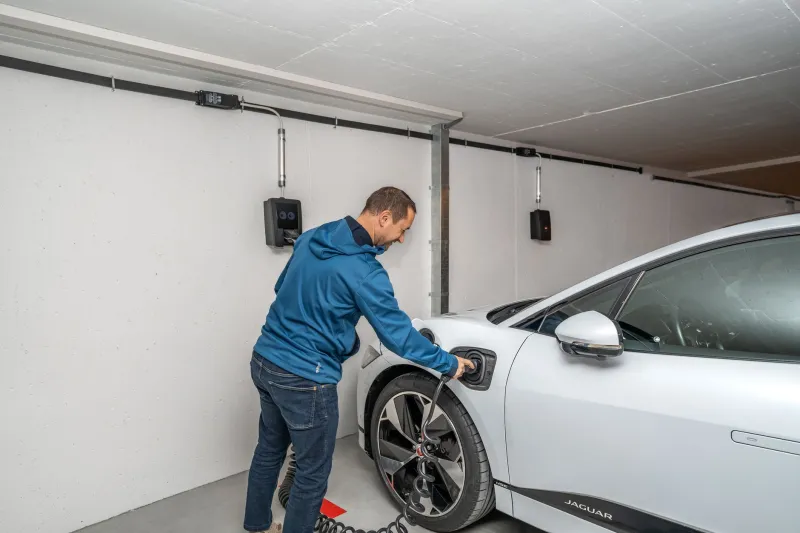
Consider a household that is, by contemporary standards, entirely ordinary: two adults working from home on separate workstations with dual monitors, a central air conditioning system running during peak afternoon hours, a Level 2 EV charger drawing 30 to 50 amps for a vehicle that arrived home the night before, a home gym with a treadmill and a commercial-grade refrigerator stocked for recovery nutrition, and a smart home ecosystem that keeps a dozen devices in a perpetual state of low-level power consumption.
This is not an extravagant household. It is an increasingly typical one. And a 100-amp panel is not equipped to manage it without strain.
The Warning Signs Most Homeowners Dismiss
The electrical system rarely fails all at once. It degrades. The signals it sends are easy to rationalize away—until they aren't.
Frequent breaker trips are the most recognizable symptom. When a circuit breaker trips, it is performing its intended function: interrupting current flow to prevent overheating. But when breakers trip regularly on circuits that were not previously problematic, the system is communicating that it is being asked to do more than it was designed for.
Flickering or dimming lights when large appliances cycle on—an air conditioner compressor, a washing machine motor, or a refrigerator starting up—indicate voltage sag. The panel is struggling to distribute power evenly across competing loads.
Warm or discolored outlet covers and switch plates suggest that wiring behind them is carrying more current than it should. Heat is the byproduct of resistance, and resistance increases when circuits are chronically overloaded.
A panel that hums, buzzes, or emits a faint burning odor is not a nuisance—it is a warning. These are signs of arcing or failing components inside the panel itself, and they warrant immediate professional evaluation.
The Real-World Scenario That Breaks the System
Picture a Tuesday afternoon in July. The outdoor temperature has climbed to 94 degrees. The central air conditioning has been running continuously since mid-morning. One occupant is on a video call, their workstation pulling full power. The other has just started a load of laundry while simultaneously running the dishwasher from lunch. In the garage, the EV charger is finishing an overnight session on a timer that was set but not adjusted for the day's schedule.
Every one of those loads is legitimate. Every one of those loads is normal. Together, they may exceed what the panel can cleanly distribute—and the result is not always a tripped breaker. Sometimes the result is sustained heat buildup in conductors and connections, degrading insulation over time in ways that are invisible until they are not.
This is the scenario that electrical engineers and fire investigators understand well. It is the scenario that many homeowners only encounter in retrospect.
Why a Panel Upgrade Is an Investment, Not an Expense
The cost of upgrading from a 100- or 150-amp panel to a 200- or 400-amp service varies by region and existing infrastructure, but it is a defined, manageable expenditure. The cost of an electrical fire—measured in property damage, displacement, insurance complications, and human safety—is not.
Beyond fire risk, an undersized panel limits what a homeowner can do with their property. Adding a home addition, installing a hot tub, upgrading to a whole-home generator, or preparing for EV ownership all require electrical capacity that older panels simply cannot accommodate. A panel upgrade is not merely a safety measure—it is the infrastructure that makes a modern lifestyle possible.
For homeowners considering a sale, an upgraded panel is also a meaningful selling point. Buyers and their inspectors are increasingly alert to electrical capacity as a factor in a home's long-term viability. A property with a robust, code-compliant panel is a more attractive asset than one requiring immediate remediation.
What a Professional Assessment Reveals
A licensed electrician does not simply look at the panel—they evaluate the entire service entry, the condition of breakers, the labeling accuracy of circuits, the presence of double-tapped breakers (a common and hazardous shortcut), and whether the panel's capacity aligns with the home's current and anticipated load profile.
At SK Electricals, this kind of assessment is the foundation of every panel-related engagement. The goal is not to sell an upgrade—it is to deliver an accurate picture of where a home's electrical infrastructure stands and what it will need to support the life being lived inside it.
If your home was built before the year 2000 and your household's electrical demands have grown in any meaningful way—a new vehicle, a home office, upgraded appliances, expanded square footage—a professional evaluation of your panel is not optional. It is overdue.
The electrical demands of modern American life are not going to decrease. The infrastructure supporting them needs to keep pace.