When Your Electrical Panel Becomes the Most Expensive Appliance in Your Home
Most homeowners spend considerable time scrutinizing their energy bills, adjusting thermostats, switching to LED lighting, and unplugging devices when not in use. Yet one of the largest contributors to elevated electricity costs sits quietly in a utility closet or basement, largely ignored until something goes wrong. The electrical panel — the nerve center of your home's power distribution — can, when outdated or undersized, function as a persistent drain on both your finances and your quality of life.
For millions of American households, particularly those built before the 1990s, a 100-amp service panel was considered entirely adequate. In that era, it was. Homes of that period typically powered a refrigerator, a few lights, a television, and perhaps a window air conditioning unit. The electrical demands were modest, and a 100-amp panel handled them without difficulty. Today, that same panel is being asked to manage smart appliances, multiple flat-screen televisions, home office equipment, electric vehicle chargers, heat pump systems, and whole-home Wi-Fi networks — simultaneously.
The gap between what your panel was designed to do and what you are asking it to do is not merely an inconvenience. It is a financial liability.
How an Undersized Panel Inflates Your Utility Bill
Electrical panels do not directly consume power the way an appliance does, but their limitations create conditions that lead to measurable energy waste. When a panel is operating near or at its capacity, circuit breakers trip more frequently. Homeowners respond by reducing loads — turning off one appliance before starting another, avoiding the simultaneous use of the oven and the dryer, or simply accepting that certain rooms will remain underserved.
This behavioral workaround has a hidden cost. Appliances that are frequently interrupted mid-cycle — particularly HVAC systems, washing machines, and dishwashers — consume more energy restarting than they would have completing their cycles uninterrupted. A clothes dryer that trips a breaker mid-cycle and must restart will use considerably more electricity over the course of a week than one operating on a properly sized circuit without interruption.
Additionally, when circuits are overloaded, resistance within the wiring increases. Electrical resistance generates heat rather than useful power, which means a measurable portion of the electricity entering your home is being converted to waste heat inside your walls rather than powering your devices. This phenomenon, while subtle, contributes to higher bills month after month.
The Real-World Scenario Most Homeowners Recognize
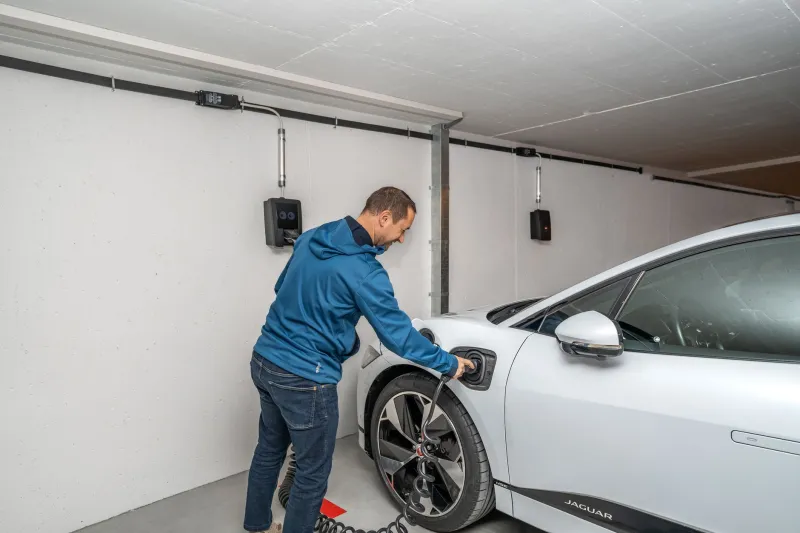
Consider a family in a 1970s-era colonial home in the Mid-Atlantic region. They added a home office during the pandemic, installed a new heat pump system for efficiency, and purchased an electric vehicle. Their 100-amp panel, which had functioned without incident for decades, suddenly began tripping breakers regularly. Their utility bills climbed. Their EV charging was restricted to overnight hours when other loads were minimal, and even then, charging speeds were sluggish.
After upgrading to a 200-amp service panel with a modern load center, the results were immediate and measurable. The EV charged at its rated speed. The heat pump cycled correctly without interruption. The home office equipment operated without flickering lights or voltage sags. Within two billing cycles, the family reported a noticeable reduction in their monthly electricity costs — not because they were using less power, but because the power they were using was being delivered and utilized efficiently.
This is not an isolated case. It is a pattern that electrical contractors across the country observe regularly.
Voltage Sags, Appliance Wear, and the Cascade of Costs
An undersized panel struggling to meet demand does not simply trip breakers. It also produces voltage sags — momentary drops in voltage that occur when high-draw appliances start up. These sags are particularly damaging to sensitive electronics, motors inside refrigerators and HVAC compressors, and variable-speed drives in modern appliances.
Over time, repeated voltage sags shorten the operational lifespan of these devices. A refrigerator compressor subjected to years of voltage instability may fail years ahead of its expected service life. A smart thermostat that experiences frequent power fluctuations may develop firmware errors or connectivity problems. The cumulative replacement and repair costs associated with appliance degradation driven by electrical infrastructure limitations can easily exceed the cost of a panel upgrade.
Put simply, homeowners often spend more maintaining and replacing appliances damaged by an inadequate panel than they would have spent upgrading the panel itself.
Modern Homes Demand Modern Infrastructure
The National Electrical Code has evolved significantly over the past three decades, and for good reason. The average American home today consumes roughly three times the electricity it did in 1970. The proliferation of electric cooking ranges, tankless water heaters, home EV charging, and high-efficiency heat pump systems has fundamentally changed the electrical profile of a typical household.
A 200-amp service panel has become the baseline recommendation for new construction, and many electrical professionals advocate for 400-amp service in homes with multiple EVs, large square footage, or plans to add solar and battery storage systems. Homeowners who remain on 100-amp service are not simply living with a minor inconvenience — they are operating infrastructure that is genuinely incompatible with the demands of contemporary American life.
What a Panel Upgrade Actually Involves
A service panel upgrade is a structured process that involves coordinating with your local utility provider, obtaining the appropriate permits, and having a licensed electrician replace the existing panel and, in many cases, the service entrance conductors. The work is typically completed within a single day for straightforward residential upgrades, though older homes may require additional attention to grounding systems or branch circuit wiring.
The investment varies depending on geographic location, the complexity of the installation, and whether additional work is required to bring the home up to current code. However, when evaluated against the ongoing costs of energy inefficiency, appliance wear, and functional limitations, the return on investment for most homeowners is both real and relatively rapid.
At SK Electricals, our team approaches panel upgrades as a whole-home assessment, not simply a component swap. We evaluate your current load, your anticipated future needs — including EV charging, solar readiness, and smart home integration — and recommend a solution scaled appropriately for your household. Our goal is to ensure that the infrastructure we install serves your home reliably for decades, not merely until the next technology cycle demands another upgrade.
The Decision Most Homeowners Delay Too Long
Electrical panels are easy to ignore. They do not announce their limitations with flashing indicators or obvious malfunctions — at least not initially. They communicate through inconvenience: the breaker that trips when you run the microwave and the coffee maker simultaneously, the lights that dim when the air conditioning compressor kicks on, the EV that charges slower than the manufacturer promised.
These signals are worth heeding. Every month spent managing workarounds and absorbing the downstream costs of an undersized panel is a month in which a straightforward upgrade would have paid dividends. If your home is still operating on a 100-amp service, the question worth asking is not whether an upgrade is necessary — it is how much longer you can afford to wait.