The Invisible Electricity Thief: How Standby Power Is Draining American Wallets One Watt at a Time
Every month, when the electric bill arrives, most American homeowners assume the numbers reflect the power they consciously used—lights switched on, appliances running, televisions watched. What very few people realize is that a meaningful portion of that bill covers electricity consumed by devices that appear, for all practical purposes, to be completely off.
This phenomenon is known as phantom power, sometimes called standby power or vampire load. It is one of the most pervasive and least discussed sources of residential energy waste in the United States today. According to data from the US Department of Energy, standby power accounts for approximately 5 to 10 percent of a typical home's annual electricity consumption. For many households, that translates to $100 to $200 per year—money spent on absolutely nothing productive.
What Exactly Is Phantom Power?
Phantom power refers to the electrical current that continues flowing into a device even when that device is not actively in use. This happens because most modern electronics are never truly off. They remain in a low-power standby state, waiting to receive a remote control signal, maintain an internal clock, preserve memory settings, or simply stay ready to launch quickly when needed.
Consider the television in your living room. When you press the power button on the remote, the screen goes dark—but the television itself remains partially active, listening for your next command. The same applies to gaming consoles, cable boxes, microwave ovens with digital displays, desktop computers in sleep mode, phone chargers left plugged in without a phone attached, and even smart home hubs that must remain continuously connected to the internet.
Individually, each device may draw only one to five watts in standby mode. That sounds negligible. But multiply that number across the fifteen, twenty, or even thirty devices present in a typical American home, and the cumulative draw becomes significant—running continuously, every hour of every day, every day of the year.
The Worst Offenders in Your Home
Not all phantom loads are created equal. Some devices are far more wasteful than others, and identifying the primary culprits is the first step toward meaningful savings.
Cable and satellite boxes are among the most egregious offenders. Many models draw 15 to 30 watts continuously, even overnight, because they are constantly downloading program guides and recording scheduled content. A single cable box running year-round can cost a homeowner $25 to $50 annually on its own.
Gaming consoles—particularly older models—are notorious for high standby consumption. Some units draw upward of 70 watts in standby mode if automatic update settings are enabled.
Desktop computers and monitors in sleep mode can collectively draw 10 to 20 watts. Laptop chargers and phone chargers left plugged in after a device is fully charged or disconnected still consume a small but real amount of power.
Home audio equipment, smart displays, and voice-activated assistants must remain perpetually connected and listening, contributing meaningfully to the overall phantom load of a connected household.
Identifying Phantom Drains in Your Home
The most precise way to measure standby consumption is to use a plug-in power meter, a relatively inexpensive device available at most hardware stores. By inserting it between an outlet and a plugged-in appliance, homeowners can read the exact wattage draw in real time—including during standby. Testing each device systematically, even over just one weekend, can reveal surprising patterns.
For a broader view, reviewing your utility bill during a period when you were away from home for a week or more can also be instructive. The electricity consumed during your absence represents your home's baseline phantom load almost exclusively.
Practical Strategies to Reclaim Wasted Energy
The good news is that phantom power is largely preventable with a combination of behavioral changes and targeted upgrades.
Smart power strips are one of the most effective tools available. Unlike standard power strips, smart versions detect when a primary device—such as a television—is powered off and automatically cut electricity to all associated devices, such as the sound system, gaming console, and streaming player. This eliminates standby draw across an entire entertainment setup with no additional effort required.
Smart plugs with scheduling capabilities allow homeowners to program specific outlets to cut power during overnight hours or other periods of extended non-use. Many models integrate directly with smartphone apps or voice-activated home systems, providing visibility into consumption patterns over time.
Unplugging devices entirely when not in use remains the simplest and most reliable method. Chargers, small kitchen appliances, and guest room electronics are ideal candidates for this habit.
Upgrading to ENERGY STAR-certified appliances is a longer-term investment worth considering during any scheduled replacement. These products meet strict standby efficiency standards set by the US Environmental Protection Agency, often drawing less than one watt in standby mode.
How Strategic Outlet Placement Can Help
One reason phantom power persists in so many homes is purely logistical: outlets are often located in inconvenient positions that make regular unplugging impractical. When a power strip is buried behind a large entertainment center or a device is plugged into an outlet hidden beneath a desk, the path of least resistance is simply to leave everything connected indefinitely.
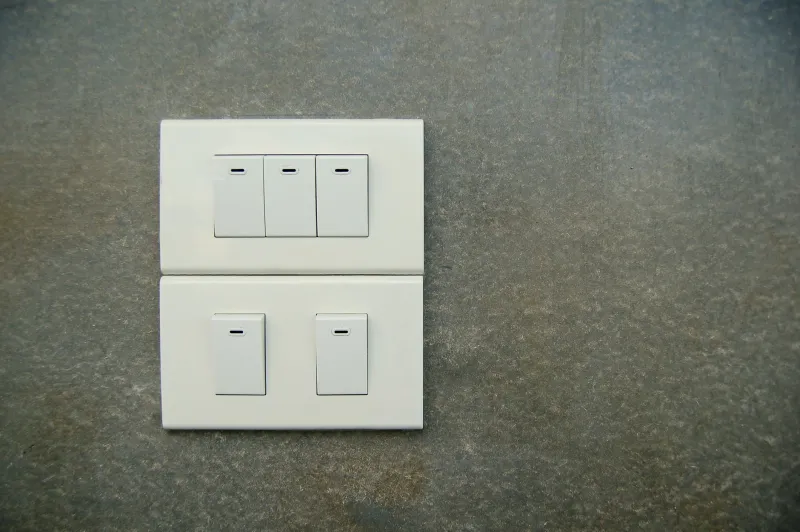
This is where thoughtful electrical design makes a genuine difference. At SK Electricals, we work with homeowners to assess how and where electricity is used throughout the home, then recommend outlet configurations that support both convenience and efficiency. Strategically placed outlets—including USB-integrated receptacles, switched outlets that can be controlled remotely, and dedicated circuits for high-draw devices—reduce the friction that leads to wasteful standby habits.
For homeowners interested in a more comprehensive approach, our team can evaluate the feasibility of installing smart circuit-level monitoring systems, which provide real-time visibility into consumption patterns across the entire home. These systems allow residents to identify unexpected draws, track efficiency improvements over time, and make informed decisions about where further upgrades are warranted.
The Broader Picture
Phantom power is not merely a personal finance issue. Across the United States, standby consumption accounts for billions of kilowatt-hours of electricity annually—a significant share of national energy demand generated by sources that carry both economic and environmental costs. Individual action, multiplied across millions of households, represents a meaningful opportunity for collective impact.
For homeowners, the financial case is straightforward. Reducing phantom loads costs very little to implement and requires no sacrifice of comfort or convenience. The savings, while modest on a monthly basis, compound meaningfully over the course of a year and across the lifespan of a home.
If you are uncertain where your home's phantom losses are greatest, or if you are interested in outlet upgrades, smart power management solutions, or a broader electrical efficiency assessment, SK Electricals is available to help. Our licensed electricians bring both technical expertise and practical experience to every project, ensuring that the solutions we recommend are appropriate for your home's specific layout, age, and electrical infrastructure.
The electricity you pay for should be electricity you actually use. Addressing phantom power is one of the most accessible ways to ensure that it is.