When Cheap Bulbs Become Expensive Problems: The Electrical Damage Hiding in Plain Sight
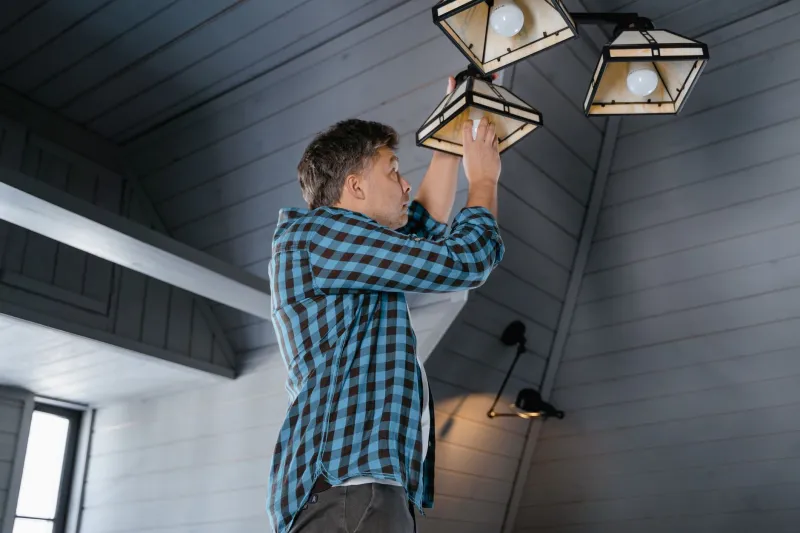
At first glance, a flickering light seems like a minor annoyance — the kind of thing a homeowner might tolerate for weeks before getting around to replacing the bulb. But what if that flicker is not a bulb problem at all? What if it is a symptom of something deeper, something that has been quietly degrading your electrical infrastructure every time you switch on a lamp?
The relationship between lighting quality and electrical system health is one that rarely gets the attention it deserves. For years, the conversation around bulb selection has focused almost entirely on energy efficiency and cost per hour. That framing, while useful, misses a more consequential dimension: the mechanical and electrical stress that inferior or mismatched bulbs can place on circuits, fixtures, wiring, and even the panel that serves your entire home.
What Flickering Actually Signals
Flickering lights are one of the most misread signals in residential electrical systems. Homeowners tend to attribute them to a loose bulb or an aging fixture, and occasionally that diagnosis is correct. More often, however, flickering indicates voltage instability — a condition where the electrical supply to a circuit is experiencing irregular fluctuations rather than delivering a steady, consistent current.
Voltage fluctuations can originate from several sources. Utility-side issues are one possibility, but in many cases the problem is internal. Overloaded circuits, degraded wiring connections, and incompatible dimmer switches are common culprits. Low-quality bulbs — particularly certain categories of LED and CFL products manufactured to minimal standards — can interact poorly with existing infrastructure in ways that amplify rather than simply respond to these fluctuations.
When a bulb's internal driver circuitry is poorly engineered, it can draw current in erratic bursts rather than smoothly. On a circuit already operating near capacity, this irregular demand creates a feedback loop: the voltage dips, the bulb flickers, the circuit experiences repeated micro-stress events, and the cumulative effect accelerates wear on everything connected to that line.
The Dimmer Compatibility Problem Nobody Talks About
One of the most widespread and least discussed sources of lighting-related electrical stress involves dimmer switch compatibility. When LED technology began replacing incandescent bulbs at scale, millions of American homes were left with dimmer switches designed for the resistive load characteristics of traditional bulbs. LEDs operate on fundamentally different electrical principles, and many budget LED products are not engineered to function correctly with legacy dimmer hardware.
The result is a mismatch that produces more than just flickering. Incompatible dimmer-bulb pairings can generate heat buildup within the switch housing, cause the dimmer's internal components to cycle on and off rapidly, and in some cases produce audible buzzing that signals electrical arcing — a legitimate fire hazard. Electricians responding to service calls frequently find scorched dimmer switches in homes where the occupants had no idea anything was wrong, attributing the occasional flicker or hum to a quirky old house rather than a genuine safety concern.
This is not a problem solved by buying a single better bulb. It requires evaluating the compatibility of the entire lighting circuit: the bulb, the fixture, the switch, and the wiring that connects them.
Wattage Mismatches and Thermal Stress
Another underappreciated failure mode involves the wattage ratings printed inside fixture housings. These ratings are not suggestions — they reflect the maximum thermal load the fixture's wiring, socket, and housing were designed to handle safely. Installing a bulb that exceeds this rating, even by a modest margin, creates sustained heat exposure that degrades the insulation on fixture wiring over time.
As insulation breaks down, the risk of arcing increases. Arcing inside a fixture or junction box is among the leading causes of residential electrical fires in the United States, and it often develops slowly and invisibly before manifesting as a serious event. The irony is that the homeowner who installs an oversized bulb to get brighter light from an older fixture may not see any immediate problem — the damage accumulates gradually, over months or years, until a connection fails in a way that cannot be ignored.
This dynamic is not limited to incandescent bulbs. Certain high-lumen LED products generate more heat than their wattage equivalents suggest, particularly in enclosed fixtures where heat cannot dissipate. A bulb marketed as a 100-watt equivalent drawing only 15 watts of electricity may still produce thermal conditions that stress a fixture rated for lower output.
How Inferior Products Affect the Broader System
The stress created by low-quality lighting does not always stay contained to the fixture or circuit where it originates. In homes with older wiring — aluminum branch circuit wiring from the 1960s and 70s, or knob-and-tube systems in pre-war construction — repeated voltage fluctuations and thermal cycling can accelerate the loosening of connections at outlets, junction boxes, and the panel itself.
Loose connections are a primary driver of resistance-related heat generation in electrical systems. As a connection loosens, its resistance increases, and increased resistance means more heat produced at that point for every amp of current passing through. Over time, this creates a condition that electricians refer to as a high-resistance fault — a hidden hot spot that can smolder inside a wall or panel for an extended period before triggering a breaker trip or, in a worst-case scenario, igniting surrounding material.
The homeowner who has been tolerating flickering lights for months may not connect that symptom to the burning smell they eventually notice near an outlet on the same circuit. The causal chain is real, even if it is not obvious.
What a Professional Assessment Reveals
Addressing lighting-related electrical problems effectively requires more than a trip to the hardware store. A licensed electrician can evaluate the condition of fixture wiring, test for voltage irregularities on affected circuits, assess dimmer switch compatibility, and identify any signs of thermal damage or loose connections that have developed over time.
In many cases, the cost of a professional inspection and the targeted repairs it identifies is substantially lower than the cost of emergency service following a failure — or worse, the cost of fire damage remediation. The bulbs themselves may be inexpensive, but the system they operate within represents a significant investment, and protecting that investment requires treating it with appropriate seriousness.
At SK Electricals, we work with homeowners throughout the country who are surprised to learn how much their lighting choices have affected their electrical infrastructure. The conversation almost always begins with something minor — a flicker, a hum, a breaker that trips more often than it used to — and ends with a clearer picture of what their system actually needs.
The Practical Takeaway
Lighting decisions are electrical decisions. A bulb is not simply a light source; it is a load on a circuit, a thermal presence inside a fixture, and a component in a larger system that depends on compatibility and quality to function safely over time.
Choosing bulbs rated for the fixtures they occupy, verifying dimmer compatibility before installation, and treating persistent flickering as a diagnostic signal rather than a cosmetic nuisance are all meaningful steps. But they are most effective when paired with periodic professional evaluation of the circuits and infrastructure those bulbs depend on.
The cheapest bulb on the shelf may cost very little at the register. What it costs inside your walls is a different calculation entirely.