Beyond the Checklist: The Electrical Problems Standard Home Inspectors Are Not Trained to Find
The home inspection is one of the most consequential steps in any real estate transaction. It is also one of the most widely misunderstood. Buyers frequently treat a passed inspection as a clean bill of health—a professional endorsement of the property's condition. In reality, a standard inspection is a visual survey of accessible systems and components, conducted under time pressure, by a generalist trained to identify obvious defects.
The electrical system is where the gap between what an inspection covers and what a home actually contains is most consequential. General home inspectors are not licensed electricians. Their training equips them to identify readily observable conditions: missing outlet covers, exposed wiring in the panel, visibly damaged fixtures. It does not equip them—nor is it expected to—to evaluate the full integrity of a home's electrical infrastructure.
The result is a category of problems that routinely pass inspection, appear in no disclosure document, and surface as expensive surprises within the first year of ownership.
What a Standard Home Inspection Actually Evaluates
The American Society of Home Inspectors (ASHI) and the International Association of Certified Home Inspectors (InterNACHI) both publish standards of practice that define the scope of a general inspection. For electrical systems, this scope includes:
- The service entrance and main panel (visual condition and labeling)
- A representative sample of outlets and switches (typically tested with a plug-in tester)
- Visible wiring in accessible areas such as the attic, basement, or crawl space
- The presence of GFCI protection in required locations
- Visible condition of the electrical panel, including obvious overcrowding or damage
This is a meaningful starting point. It is not a comprehensive electrical assessment.
Inspectors are explicitly not required to move furniture, remove outlet covers, open walls, or evaluate systems that are not readily accessible. The inspection is a snapshot of visible conditions on a single day—and electrical problems, by their nature, often hide.
The Issues That Routinely Escape Detection
Improper Grounding in Older Construction
Homes built before the mid-1960s were frequently wired without a grounding conductor. Two-prong outlets were standard. Over the decades, many of these properties were partially updated—three-prong outlets were installed without running a proper ground wire, creating outlets that appear modern but offer none of the protection that grounding provides.
A basic plug-in outlet tester, the tool most inspectors use, cannot reliably detect a false ground. It reads the presence of the ground pin connection—not whether that connection is actually grounded. Homes with this condition pass visual inspection while presenting a genuine shock and fire risk.
Aluminum Branch Circuit Wiring
Between approximately 1965 and 1973, aluminum wiring was used extensively in residential branch circuits as a cost-saving alternative to copper. The material is not inherently dangerous, but it behaves differently than copper—it expands and contracts more with temperature changes, oxidizes at connection points, and requires specific devices and connection methods to remain safe.
Much of this wiring remains in homes across the country, and much of it has not been properly maintained or updated. Inspectors who identify aluminum wiring may note it as an observation without fully conveying the remediation options or urgency. Buyers who do not ask follow-up questions often close without understanding what they have inherited.
Outdated Branch Circuit Capacity
Older homes were wired with circuit capacity appropriate for the appliance loads of their era. A kitchen circuit designed for a 1975 appliance load may now serve a high-draw microwave, a coffee system, a toaster oven, and a countertop appliance simultaneously—all on the same 15-amp circuit.
The wiring may be intact and the breaker may be functional. The circuit may even pass a basic test. But the mismatch between circuit capacity and contemporary use creates chronic overloading that degrades insulation and connections over time, in ways that are not visible during a walk-through.
Concealed Code Violations
Unpermitted electrical work is among the most common concealed defects in the residential market. Additions, finished basements, converted garages, and basement home theaters are frequent sites of DIY or unlicensed electrical work that was never inspected. This work may appear functional—outlets work, lights operate—while concealing fundamental violations: undersized wiring, missing junction box covers, improper splices, absent AFCI protection on bedroom circuits, or panel modifications that do not meet code.
Because this work is behind finished surfaces, it is invisible to a general inspection. It may also be invisible to the seller's disclosure, particularly if the work was done by a prior owner.
Panel Defects Beyond Visual Identification
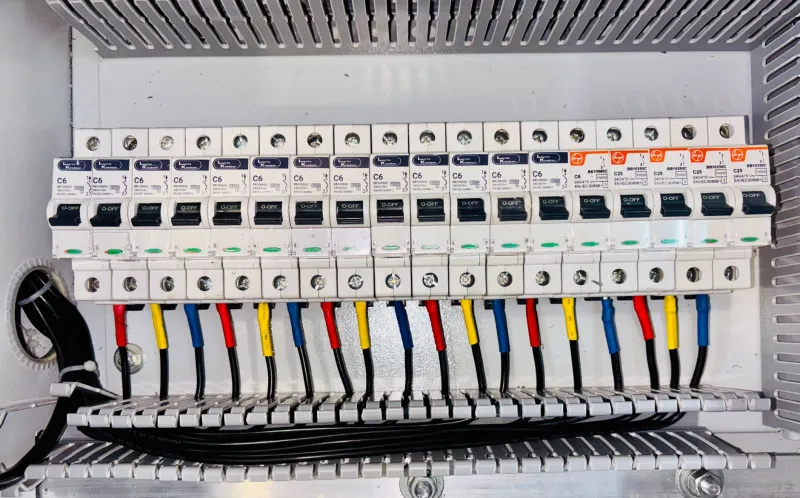
The panel is the component most inspectors spend the most time evaluating—and it is still frequently misread. Double-tapped breakers (two conductors connected to a single breaker terminal not rated for that configuration) are a common finding that inspectors may note without fully conveying the risk. Breakers that have been tripped and reset repeatedly without investigation may appear functional while concealing a chronic overload condition. Federal Pacific Electric Stab-Lok panels and Zinsco panels—both associated with documented reliability and safety concerns—are sometimes identified by inspectors and sometimes not, depending on familiarity and training.
A licensed electrician evaluating the same panel will assess not just its visual condition but its operational history, its load capacity relative to the home's circuits, and whether its components are functioning within their rated parameters.
The Pre-Purchase Electrical Audit: A Different Kind of Evaluation
A professional electrical audit conducted by a licensed electrician is not a duplicate of the general inspection. It is a complementary evaluation that operates at a different level of depth and technical specificity.
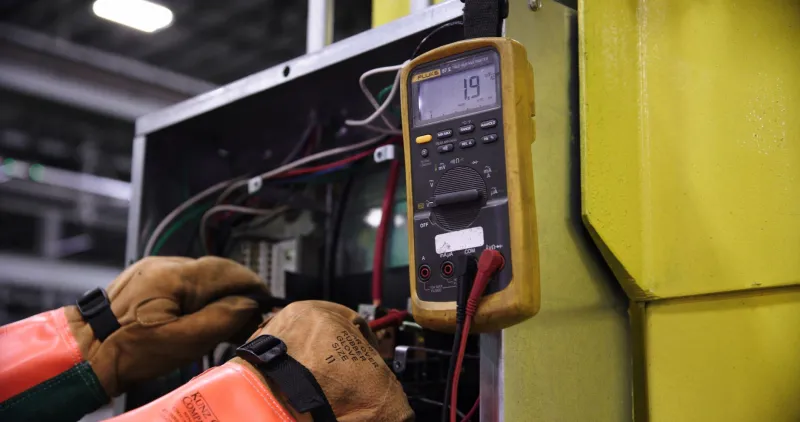
At SK Electricals, a pre-purchase electrical audit includes a thorough assessment of the service panel, a circuit-by-circuit evaluation of load and condition, outlet testing with equipment capable of identifying false grounds and wiring polarity issues, identification of aluminum branch circuits and their connection condition, and a review of the property's permit history to flag potential unpermitted work.
The findings are documented in a report that gives the buyer—or their attorney—a factual basis for negotiation, remediation requests, or, in some cases, a decision to walk away from a transaction that would otherwise have closed with significant hidden liability.
The Economics of Knowing Before You Close
The cost of a professional electrical audit is modest relative to the transactions it informs. The cost of discovering a major electrical defect after closing—when negotiating leverage has evaporated and remediation is entirely the buyer's financial responsibility—is not.
Electrical repairs identified post-closing can range from a few hundred dollars for minor corrections to tens of thousands for full rewiring, panel replacement, or remediation of extensive unpermitted work. These are not hypothetical scenarios. They are the routine experience of buyers who relied on a general inspection as their only technical due diligence.
The home inspection remains a valuable and important step in any purchase. It should not be the last word on the electrical system of a property representing hundreds of thousands of dollars in investment. A professional electrical audit is the step that transforms a general assessment into genuine informed decision-making—and it is the step that the most consequential electrical problems actually require.