Keys, Codes, and Consequences: The Landlord's Electrical Compliance Playbook Across Every State
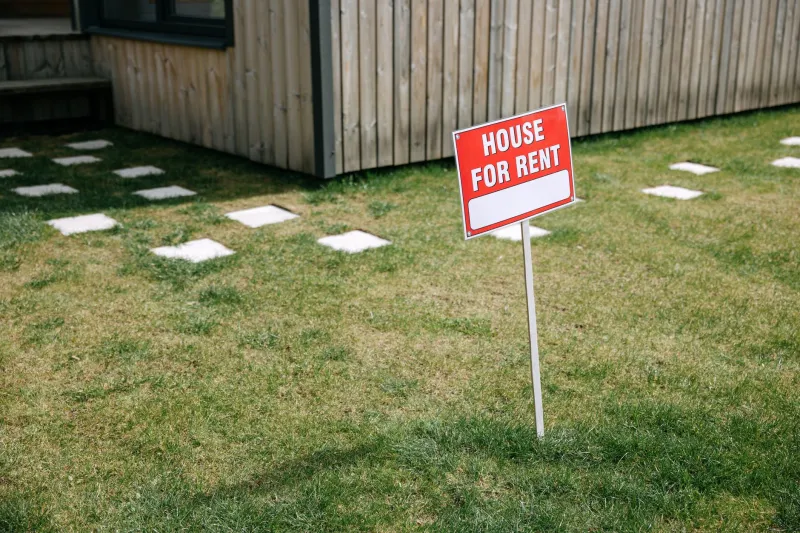
Owning rental property in the United States means operating within a legal environment that varies significantly depending on where that property sits. Federal housing standards provide a baseline, but the granular requirements governing electrical safety in rental units—what must be inspected, how often, what must be disclosed, and who bears liability when something fails—are largely determined at the state and municipal level.
For landlords managing single-family rentals, multi-unit buildings, or mixed-use properties, that complexity is not merely administrative. It is financial. The cost of non-compliance—through tenant lawsuits, insurance claim denials, municipal fines, or forced remediation—can dwarf the cost of proactive electrical auditing and maintenance.
This article is a structured overview of the electrical compliance landscape for US landlords, organized around the decisions and obligations that matter most before a lease is signed.
The Federal Floor: What HUD and the Fair Housing Act Require
At the federal level, rental housing must meet habitability standards that include functioning electrical systems capable of supporting safe occupancy. The Department of Housing and Urban Development (HUD) mandates that properties participating in federal assistance programs—such as Section 8 housing—pass Housing Quality Standards (HQS) inspections that include electrical components.
For landlords outside federal programs, the baseline is established by state and local codes—and the variation between jurisdictions is substantial.
State-by-State Electrical Standards: A Framework for Understanding the Differences
Most states adopt some version of the National Electrical Code (NEC), published by the National Fire Protection Association (NFPA). However, adoption is not uniform. Some states operate on the current edition; others enforce versions that are one or two cycles behind. The NEC is updated every three years, and each cycle introduces new requirements—for arc-fault circuit interrupters (AFCIs), ground-fault circuit interrupters (GFCIs), tamper-resistant outlets, and panel capacity standards, among others.
California enforces some of the most stringent electrical standards in the nation. The California Electrical Code aligns closely with current NEC editions, and the state's tenant protection laws create significant liability exposure for landlords who fail to maintain electrical systems in working order. Local jurisdictions—particularly in the Bay Area and Los Angeles—may impose additional inspection requirements.
New York requires that rental properties meet the New York State Uniform Fire Prevention and Building Code, which incorporates NEC standards. New York City operates under its own Electrical Code, which is more prescriptive than state requirements and includes mandatory periodic inspections for certain property types. Landlords in New York City must work with licensed master electricians for permitted work.
Texas presents a different profile. The state does not mandate a statewide building code, leaving electrical standards largely to municipalities. Houston, for instance, has historically operated without mandatory residential building codes in unincorporated areas, though the city proper enforces its own standards. Landlords in Texas must research requirements at the municipal level and cannot assume statewide uniformity.
Florida requires adherence to the Florida Building Code, which incorporates NEC standards with state-specific amendments. The state's humid climate creates particular concerns around GFCI protection in bathrooms, kitchens, garages, and outdoor areas—locations where moisture and electrical current intersect with predictable risk.
Illinois and Ohio follow NEC adoption schedules but leave significant enforcement authority to counties and municipalities. Landlords in Chicago, for example, must comply with the Chicago Electrical Code, which operates independently of the statewide framework.
The practical implication for multi-state landlords is that a compliance posture that satisfies requirements in one jurisdiction may fall short in another. Managing this without professional guidance is an exercise in managed risk at best.
Inspection Frequency: What the Law Actually Requires
Inspection mandates vary widely. Some jurisdictions require periodic electrical inspections of rental properties on a fixed schedule—every three to five years in certain municipalities. Others require inspections only upon a change of tenancy, following a complaint, or as part of a certificate of occupancy renewal.
Landlords who rely on the absence of a mandatory inspection schedule to defer electrical maintenance are taking a position that courts and insurers have not consistently supported. The implied warranty of habitability—recognized in virtually every US state—creates an ongoing obligation to maintain electrical systems in safe working condition, regardless of whether an inspector has recently visited the property.
Documentation of proactive maintenance and inspection is a landlord's most effective defense in tenant disputes and insurance proceedings.
What Landlords Must Address Before Handing Over Keys
Regardless of jurisdiction, the following electrical conditions should be verified and documented before any tenancy begins:
- GFCI protection in all required locations (kitchens, bathrooms, garages, outdoor outlets, and unfinished basements)
- AFCI protection on circuits where required by the applicable NEC edition
- Panel condition, including the absence of double-tapped breakers, properly labeled circuits, and no evidence of overheating or moisture intrusion
- Grounding continuity throughout the property, particularly in older homes where two-prong ungrounded outlets may remain
- Smoke and carbon monoxide detector compliance, which intersects with electrical requirements in most jurisdictions
- Absence of aluminum branch circuit wiring without appropriate remediation (a concern in homes built between approximately 1965 and 1973)
Any unpermitted electrical work performed by prior owners should be identified, evaluated, and either properly permitted or remediated before occupancy. Inheriting a liability is not a defense against it.
Liability Exposure: What Happens When Compliance Fails
When an electrical failure in a rental unit causes injury, property damage, or death, the landlord's liability exposure is determined by what they knew or should have known, and what they did or failed to do in response. Courts in most states have found landlords liable in cases where deferred maintenance or non-compliant conditions were a proximate cause of harm.
Insurance carriers are increasingly attentive to electrical condition in rental properties. Policies may exclude coverage for fires or injuries attributable to known deficiencies—and a landlord who cannot demonstrate a history of professional inspection and maintenance may find their coverage inadequate when it matters most.
Positioning Compliance as a Competitive Advantage
Beyond liability management, electrical compliance is a differentiating factor in the rental market. Tenants with options increasingly evaluate the condition and modernity of a property's systems—including electrical infrastructure—as part of their decision-making. A property with documented compliance, modern safety features, and adequate capacity for contemporary device loads is a more competitive asset.
SK Electricals works with landlords across property types to conduct pre-tenancy compliance audits, prepare documentation for insurance and legal purposes, and execute remediation efficiently. The goal is not simply to pass an inspection—it is to create properties that are genuinely safe, genuinely compliant, and genuinely protected.
The complexity of electrical compliance across US jurisdictions is not going to simplify itself. The landlords who navigate it most successfully are those who engage qualified professionals before the keys change hands—not after a tenant files a complaint or a circuit fails at midnight.