When Lights Flicker, Your Home Is Talking: Understanding the Electrical Faults You Cannot Afford to Ignore
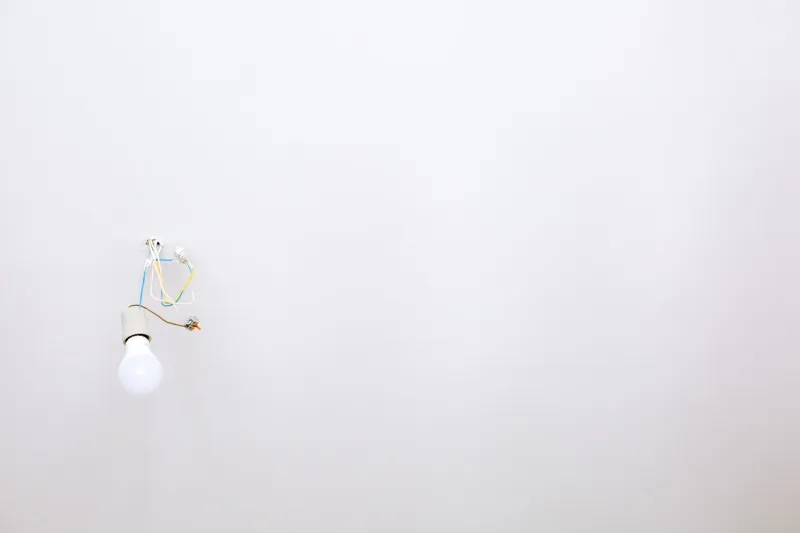
It happens in millions of American homes every day. A light dims briefly, recovers, and dims again. Most homeowners glance up, shrug, and return to whatever they were doing. It is an easy thing to dismiss—after all, the light came back on, and nothing seems broken. But that momentary flicker is not random. It is your electrical system communicating a condition that deserves a direct and informed response.
At SK Electricals, we have responded to service calls where a homeowner's first words are some variation of: "We noticed it flickering for months, but we thought it would go away on its own." It rarely does. Understanding what causes flickering lights—and what distinguishes a benign cause from a dangerous one—is among the most practical pieces of electrical knowledge a homeowner can possess.
Why Lights Flicker: The Spectrum of Causes
Not all flickering originates from the same source, and the distinction matters considerably. At the less concerning end of the spectrum, a light that flickers only when a large appliance—such as a washing machine, air conditioning unit, or refrigerator—cycles on is often experiencing a brief voltage drop caused by that appliance's startup demand. These motor-driven devices draw a surge of current when they first activate, temporarily reducing voltage to other circuits in the home. While this phenomenon is worth monitoring, it is not inherently dangerous if it occurs infrequently and the dip resolves quickly.
However, flickering that is persistent, affects multiple rooms simultaneously, or occurs without any corresponding appliance activity tells a different story entirely.
Loose Connections: The Most Underestimated Hazard
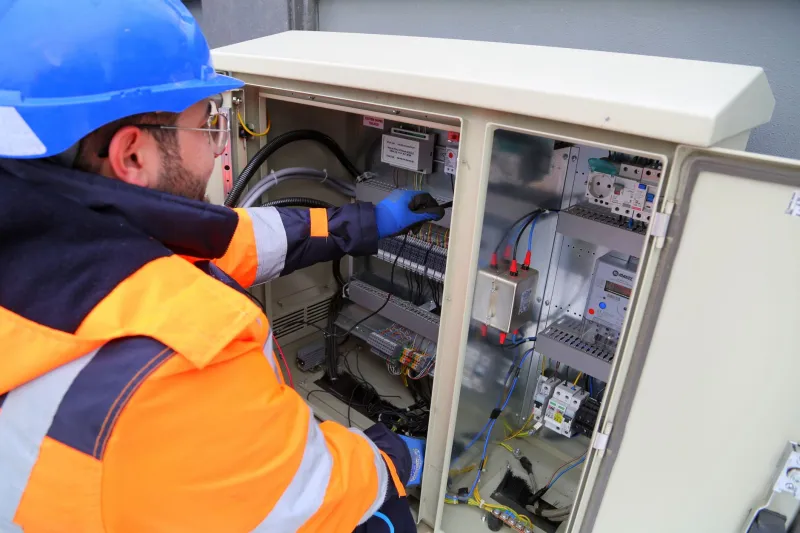
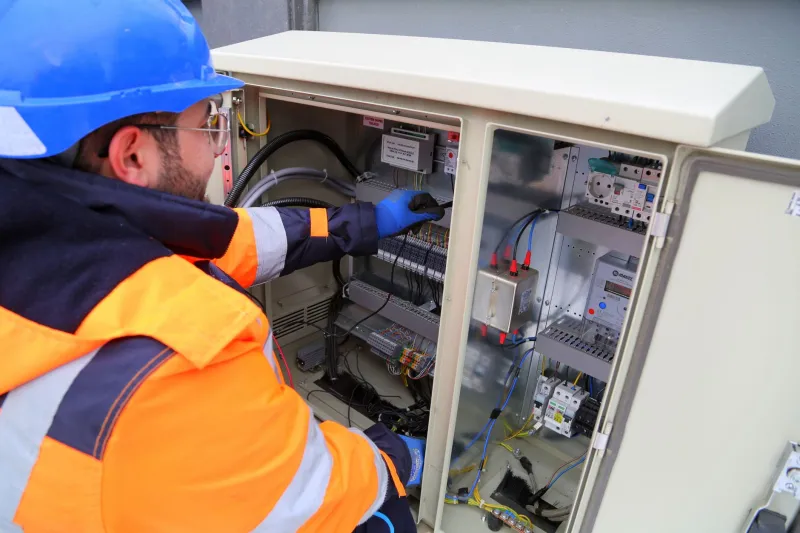
Among the most common and most dangerous causes of flickering lights in American homes is a loose electrical connection somewhere within the system. This could be at the light fixture itself, at a wall switch, within an outlet box, or—most critically—at the main electrical panel or a circuit breaker.
Loose connections create what electricians call arcing: a condition where electrical current jumps across a gap rather than flowing through a solid conductor. Arcing generates intense, localized heat. According to the U.S. Fire Administration, electrical fires claim hundreds of lives and cause billions of dollars in property damage annually, and faulty wiring connections represent one of the leading contributing factors. The unsettling truth is that arcing can occur inside a wall or panel enclosure for weeks or months before any visible symptom—beyond that occasional flicker—becomes apparent.
If your lights flicker inconsistently and without an obvious pattern, a loose connection somewhere in the circuit pathway is a serious possibility that warrants professional evaluation.
Overloaded Circuits and Aging Infrastructure
Another frequent culprit is an overloaded circuit. Modern American households have electrical demands that were simply not anticipated when many homes—particularly those built before 1980—were originally wired. Today's typical home runs multiple high-draw devices simultaneously: large-screen televisions, gaming systems, home office equipment, kitchen appliances, and increasingly, electric vehicle chargers. When circuits are asked to carry more current than their rated capacity, voltage fluctuates, and lights are often the first indicator.
Faulty circuit breakers compound this problem. A breaker that is aging or partially failing may not trip as it should under overload conditions. Instead of cutting power cleanly, it allows current to pass inconsistently, producing exactly the kind of erratic voltage behavior that causes flickering. This is a particularly insidious scenario because the breaker—the device designed to protect the circuit—is itself the source of the fault.
Older wiring types, including aluminum branch circuit wiring used extensively in homes constructed during the 1960s and 1970s, are also associated with connection degradation over time. Aluminum wiring expands and contracts at a different rate than the copper connections it interfaces with, which can loosen those connections gradually and create ongoing flickering as well as elevated fire risk.
Utility-Side Issues: When the Problem Is Outside Your Walls
Not every flickering light originates within your home's wiring. In some cases, the issue lies with the utility company's service connection to your property. A damaged service entrance cable, a failing connection at the utility transformer, or a problem with the neighborhood's distribution infrastructure can all cause voltage irregularities that manifest as flickering indoors.
A useful diagnostic indicator here is whether your neighbors are experiencing similar symptoms. If they are, the problem is almost certainly on the utility side, and the appropriate first call is to your electric utility provider. If your home is the only one affected, the fault is internal and requires the attention of a licensed electrician.
How to Read Your Own Flickering: A Practical Framework
Before calling for service, it is worth observing your flickering lights with some precision. Consider the following:
-
Is the flickering isolated to one fixture, one room, or the entire home? A single fixture flickering suggests a localized issue—possibly a failing bulb, a loose connection at that fixture, or a faulty dimmer switch. Whole-home or multi-room flickering points to a panel-level or service-entrance problem.
-
Does the flickering correlate with specific appliance activity? If your lights dim every time your HVAC system kicks on, you may be dealing with an undersized circuit or an appliance drawing more current than it should.
-
Is the flickering accompanied by other symptoms? Buzzing sounds from outlets or panels, warm or discolored switch plates, a burning smell, or frequently tripping breakers alongside flickering lights elevate the urgency significantly. These combinations suggest active arcing or overheating.
-
How long has it been occurring? A flicker that appeared once and has not returned may be trivial. A flicker that has persisted for days or weeks—regardless of severity—deserves professional assessment.
When to Stop Troubleshooting and Call a Professional
There is a clear threshold beyond which homeowner observation must give way to licensed electrical service. That threshold is reached when:
- Flickering is accompanied by any burning smell, scorch marks, or warmth around electrical components
- Multiple circuits or the entire home are affected
- Your panel is older than 25 years, or you have a panel brand with a known history of safety concerns
- You have aluminum branch circuit wiring and have never had a professional inspection
- The flickering has persisted for more than a few days without explanation
In these scenarios, the risk of continued inaction—measured in potential fire damage, equipment destruction, and personal safety—far exceeds the cost of a service call. An experienced electrician can perform a systematic inspection of your panel, connections, and wiring to identify the fault before it becomes an emergency.
The Cost Comparison That Matters
Homeowners sometimes hesitate to schedule an electrical inspection because of cost concerns. This is understandable, but the financial calculus deserves honest consideration. A professional diagnostic visit and connection repair is a fraction of the cost of repairing fire damage, replacing appliances destroyed by voltage irregularities, or addressing the liability exposure that comes with an electrical fire in a home that showed prior warning signs.
Your electrical system does not raise its voice. It communicates through small, easy-to-overlook signals—and a flickering light is among the clearest messages it sends. The appropriate response is not to wait and see whether the message stops. It is to listen, investigate, and act while the remedy is still straightforward.
If your home has been sending you this signal, SK Electricals is ready to help you decode it.