The Hidden Energy Drain Beneath Your Feet: What Your Garage and Basement Are Costing You Every Month
For most American homeowners, the pursuit of a lower electricity bill begins in the kitchen, the living room, or the bedroom—places where daily life is most visible and habits are easiest to observe. What rarely comes to mind is the garage or the basement. These utilitarian spaces are often treated as afterthoughts in energy conversations, yet they frequently harbor some of the most persistent and costly electrical inefficiencies in the entire home.
The term "phantom load" refers to the electricity consumed by devices and systems that are not actively in use but remain connected to a power source. In living spaces, phantom loads are relatively well-documented—televisions on standby, phone chargers left in outlets, gaming consoles in sleep mode. But in garages and basements, the problem takes on a different character. Here, the loads are not just phantom; they are frequently forgotten entirely.
Why Garages and Basements Are Uniquely Problematic
The architecture of neglect is straightforward. Garages and basements are spaces where equipment gets stored, projects get abandoned, and old appliances go to retire—without ever being fully decommissioned. A secondary refrigerator purchased in 2009 to hold overflow groceries may still be running in a corner of the basement, drawing power continuously even when it holds little more than condiments and a few forgotten beverages. A chest freezer acquired for a bulk-buying phase that passed years ago may be maintaining temperature around the clock for a fraction of its intended capacity.
Beyond appliances, these spaces often contain circuits that were installed for specific purposes—a workshop, a home gym, a hobby room—that no longer serve those functions. Yet the wiring remains live, the outlets remain energized, and any devices left plugged in continue to consume electricity without a second thought from anyone in the household.
There is also the matter of environmental conditions. Garages and basements tend to be less climate-controlled than the rest of the home. An older refrigerator or freezer operating in an unconditioned garage during a hot American summer must work considerably harder to maintain its internal temperature, driving energy consumption well above what its specifications suggest under normal conditions.
The Worst Offenders: A Closer Look
Certain categories of equipment appear repeatedly when professional electrical audits are conducted in these spaces.
Secondary refrigerators and chest freezers rank among the most significant contributors. An older model refrigerator—particularly one manufactured before current energy efficiency standards took effect—can consume anywhere from 150 to over 400 kilowatt-hours per month depending on its age, condition, and ambient temperature. At national average electricity rates, a single inefficient unit running year-round can represent a meaningful line item on an annual budget.
Dehumidifiers are another common source of continuous draw, particularly in basements across the Midwest, the Mid-Atlantic, and the Southeast, where humidity management is a genuine necessity. While dehumidifiers serve a legitimate purpose, older units without modern efficiency ratings or smart humidity controls often run far more than necessary, cycling continuously rather than responding to actual moisture levels.
Workshop equipment and power tools left plugged into strips or directly into outlets maintain standby draws even when switched off. Battery chargers for power tools are among the quieter offenders—drawing power continuously whether or not a battery is attached.
Lighting circuits in garages and basements frequently feature older fluorescent fixtures or incandescent bulbs on circuits that are never audited for efficiency. Motion-sensor controls and LED conversions in these spaces are often deferred indefinitely simply because the spaces are used infrequently and the issue never feels urgent.
Sump pump systems, water heaters, and HVAC-related equipment located in basements add further complexity. While these systems serve essential functions, aging or improperly configured units can draw more power than necessary, and supplemental heat cables or pipe warming systems installed for cold-weather protection are sometimes left active well beyond their seasonal usefulness.
Why Detection Is Harder Than It Appears
One of the reasons phantom loads in garages and basements persist for so long is that they are genuinely difficult to detect without proper tools and methodology. A homeowner walking through a garage or basement will observe equipment that appears off. Nothing is obviously running. There are no lights on, no sounds of motors cycling, no visible indicators of activity.
But electrical consumption does not require visible activity. Standby power draws, energized circuits with no load attached, and inefficient equipment operating in low-power states all contribute to consumption without announcing themselves. Standard utility bills provide total consumption figures that obscure where within the home that energy is being spent.
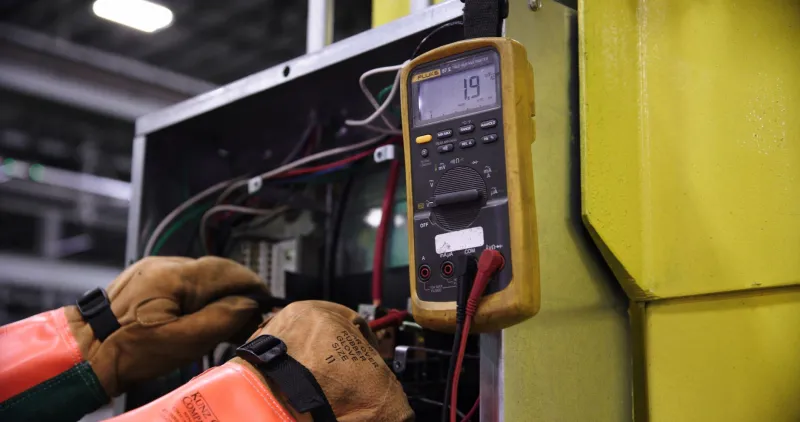
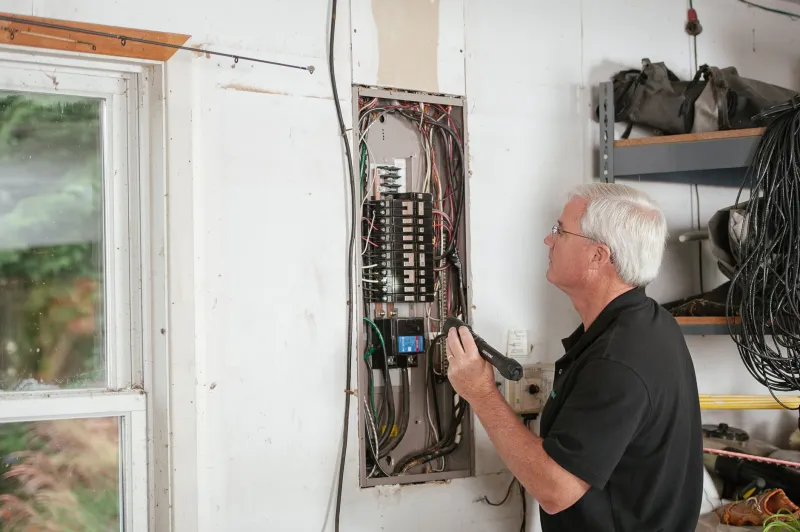
This is precisely why a professional whole-home electrical audit—one that includes circuit-level measurement in every zone of the property, including garages and basements—provides information that no amount of casual observation can replicate. Using clamp meters, circuit analyzers, and load-monitoring equipment, a qualified electrician can identify exactly which circuits and devices are drawing power, at what rate, and whether that draw is consistent with the equipment's intended purpose.
Practical Strategies for Reclaiming Wasted Energy
Addressing phantom loads and energy inefficiencies in garages and basements does not require wholesale renovation. A structured, prioritized approach can yield meaningful results.
Audit and decommission unused circuits. If a circuit was installed for a workshop that no longer exists or a home gym that has been relocated, that circuit should be properly evaluated. Deenergizing unused circuits eliminates any residual draw from connected devices and reduces the risk of electrical hazards from unmonitored wiring.
Evaluate secondary appliances honestly. A secondary refrigerator or chest freezer that is less than half full most of the year may cost more to operate annually than the value of the convenience it provides. Replacing aging units with modern, Energy Star-certified models—or consolidating storage to eliminate the secondary appliance entirely—can produce immediate savings.
Install smart power strips and outlet controls. For workbench areas and entertainment zones within garages or finished basements, smart power strips can eliminate standby draws by cutting power to inactive devices automatically. Smart outlets with scheduling capabilities allow homeowners to ensure that equipment is only energized during periods of actual use.
Upgrade lighting to LED with occupancy controls. Replacing fluorescent or incandescent fixtures in garages and basements with LED alternatives, paired with motion-activated or occupancy-sensing controls, addresses one of the most straightforward inefficiencies in these spaces without significant investment.
Schedule a professional inspection of basement mechanical systems. Water heaters, sump pump systems, and dehumidifiers operating beyond their optimal efficiency range are best identified and addressed by a licensed electrician working alongside other home systems professionals. Ensuring that these systems are properly configured, appropriately sized, and operating within expected parameters is not a task well-suited to guesswork.
The Cost of Continued Inattention
Phantom loads in garages and basements are not catastrophic in isolation. No single device or circuit is likely to generate a dramatic spike on a monthly bill. What makes the problem significant is its cumulative, persistent nature. These loads run every day, every month, every year—quietly adding to totals that homeowners attribute to general usage rather than traceable inefficiency.
Over the course of several years, the cost of inattention in these spaces can reach into the hundreds or even thousands of dollars—money that could have been redirected toward meaningful upgrades or simply kept in the household budget.
At SK Electricals, our approach to residential electrical service includes a thorough evaluation of every circuit and system in the home, not just those in the most visible rooms. If your garage and basement have never been the subject of a professional electrical review, there is a reasonable probability that they are costing you more than they should. The path to correcting that begins with understanding what is actually happening behind the walls and beneath the floor—and that understanding starts with a conversation.