Small Mistakes, Massive Bills: The True Financial and Safety Toll of DIY Electrical Repairs
There is a certain satisfaction in handling home repairs independently. For many American homeowners, tackling a project without calling a contractor represents both thrift and self-reliance. In many areas of home maintenance, that instinct is entirely reasonable. Electrical work, however, operates under a different set of physical and legal realities—ones where a miscalculation does not simply mean a loose cabinet door or a leaky faucet. It can mean a structure fire, a denied insurance claim, or a failed home inspection that derails a sale years down the road.
This is not an argument against homeowner initiative. It is, rather, an honest accounting of where the math on DIY electrical projects frequently breaks down.
Why Electrical Work Feels Approachable—And Why That Impression Is Misleading
Online video tutorials and home improvement forums have made electrical repairs appear more accessible than they once were. A homeowner can watch a ten-minute walkthrough on replacing a circuit breaker or adding a new outlet and come away feeling reasonably confident. The tools are inexpensive. The components themselves are available at any hardware retailer. The job, on the surface, does not look complicated.
What those tutorials rarely cover is the system behind the fixture. Residential electrical systems are interconnected networks operating under precise load tolerances, grounding requirements, and code standards that vary by municipality and are updated on a regular cycle. The National Electrical Code, published by the National Fire Protection Association and adopted in whole or in part by most US jurisdictions, is updated every three years. What was acceptable practice in 2005 may be a code violation today—and what looks correct to an untrained eye may be functionally dangerous in ways that only become apparent under load or over time.
Common DIY Electrical Errors and Their Downstream Consequences
Certain mistakes appear with notable frequency in post-incident inspections and insurance assessments. Understanding them helps illustrate how small errors compound.
Incorrect wire gauge selection. Pairing a circuit breaker with wiring that cannot safely carry its rated amperage is one of the most common and hazardous DIY errors. A 20-amp breaker connected to 14-gauge wire rather than the appropriate 12-gauge creates a situation in which the wire can overheat before the breaker trips. In wall cavities, that heat has nowhere to dissipate. The result is a fire risk that may not manifest for months or years after the installation.
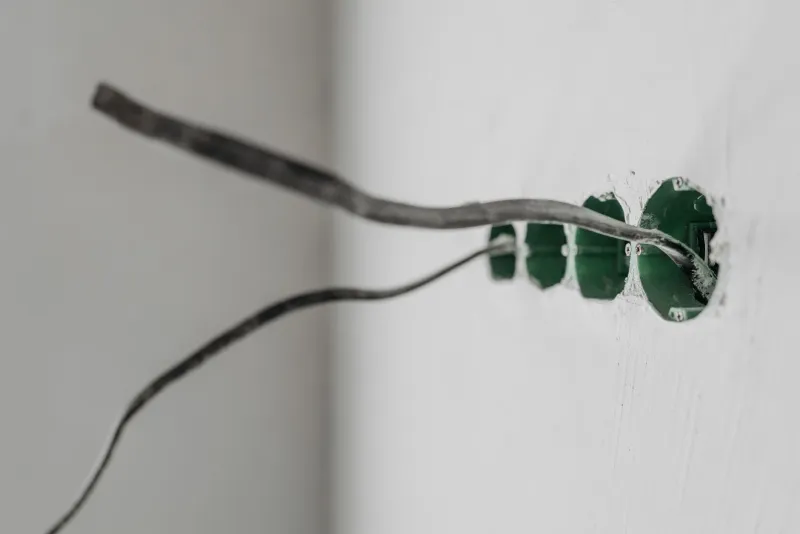
Improper junction box work. Splicing wires outside of an approved junction box—or using a box that is undersized for the number of conductors it contains—is a code violation that also creates a genuine hazard. Loose connections in unprotected spaces are a leading cause of residential electrical fires.
Missing or incorrect grounding. Grounding protects both people and equipment. DIY outlets installed without proper grounding may test as functional with a basic outlet tester while still presenting a shock risk and failing to protect connected electronics during a surge event.
Overloaded circuits. Adding outlets or fixtures to an existing circuit without calculating the total load is a frequent error. A circuit that was properly sized for its original purpose may be dangerously overloaded after amateur modifications, leading to nuisance tripping at best and wire degradation at worst.
What Insurance Companies Actually Look For
Many homeowners assume that their homeowner's insurance policy will cover electrical fire damage regardless of how the wiring was installed. This assumption deserves scrutiny.
Most standard homeowner's policies do cover fire damage—but coverage can be partially or fully denied if an investigation determines that the fire originated from unpermitted work or a code violation. When an insurer dispatches an adjuster and a forensic electrician to assess a fire claim, they are specifically looking for evidence of work that was not performed to code or that was not permitted by the local authority having jurisdiction.
In practice, this means a homeowner who installed a new subpanel without pulling a permit, or who added circuits without an inspection, may find their claim challenged at precisely the moment they need coverage most. Legal disputes with insurers over denied or reduced claims add attorney fees on top of repair costs, turning what was intended as a money-saving project into a financially devastating sequence of events.
The Compounding Cost Problem
Consider a relatively common scenario: a homeowner adds two new outlets in a basement workshop by tapping into an existing circuit, without a permit and without professional guidance. The work appears functional. Several months later, a burning smell prompts an electrician to investigate. The diagnosis reveals that the added load has been stressing the original wiring, that the splice connections were not made to code, and that the circuit is now a fire risk. The repair requires opening walls, replacing a section of wiring, and bringing the circuit into compliance with current code—including a permit, inspection, and potentially upgrading the outlet configuration.
The original DIY project may have cost less than $100 in materials. The remediation, in a mid-sized American city, will typically run between $800 and $2,500 depending on the extent of the damage and the local market for licensed electrician labor. If drywall repair and repainting are required, add another $500 to $1,500.
That is before accounting for any damage to equipment connected to the circuit, any insurance complications, or any impact on a future home appraisal.
Permits Exist for a Reason
Building permits for electrical work are not bureaucratic inconveniences. They are the mechanism by which local jurisdictions ensure that work performed inside homes meets the safety standards designed to protect occupants and neighboring properties. An inspection by a licensed electrical inspector is the only reliable independent verification that a system has been correctly installed.
When unpermitted work is discovered—during a home sale, a refinancing appraisal, or an insurance investigation—the homeowner typically bears the full cost of bringing it into compliance. In some municipalities, that process requires opening walls to expose original work, even if it appears to be functioning correctly.
When DIY Is and Is Not Appropriate
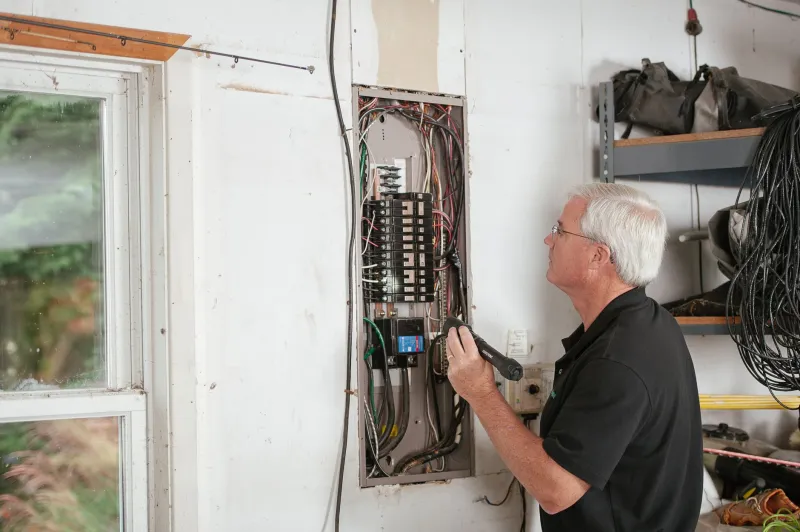
This is not a blanket prohibition on homeowner involvement. Replacing a like-for-like light fixture, swapping a standard outlet cover, or resetting a tripped GFCI receptacle are tasks that fall within the reasonable capabilities of a careful homeowner in most jurisdictions. The distinction lies in any work that involves the panel, new circuits, changes to load capacity, or modifications that require a permit.
When in doubt, the cost of an initial consultation with a licensed electrician is almost always lower than the cost of correcting work that was done incorrectly. Many electrical contractors, including the team at SK Electricals, offer assessments that can help homeowners understand exactly what a project involves before any decisions are made.
The Professional Difference
Licensed electricians carry insurance, work under bond, and are required to stay current with code changes in their jurisdiction. Their work is subject to inspection and carries accountability that a homeowner working independently cannot replicate. When something goes wrong with professionally installed, permitted electrical work, the path to resolution is clear. When it goes wrong with DIY work, the homeowner bears all of it—the repair cost, the legal exposure, and the insurance risk.
The appeal of handling things yourself is real, and it is not without merit in many contexts. Electrical systems, however, are one area where the hidden costs of getting it wrong have a way of appearing long after the project is complete—and far exceeding whatever was saved at the outset.