Aging Wiring, Real Consequences: What's Living Inside the Walls of Older American Homes
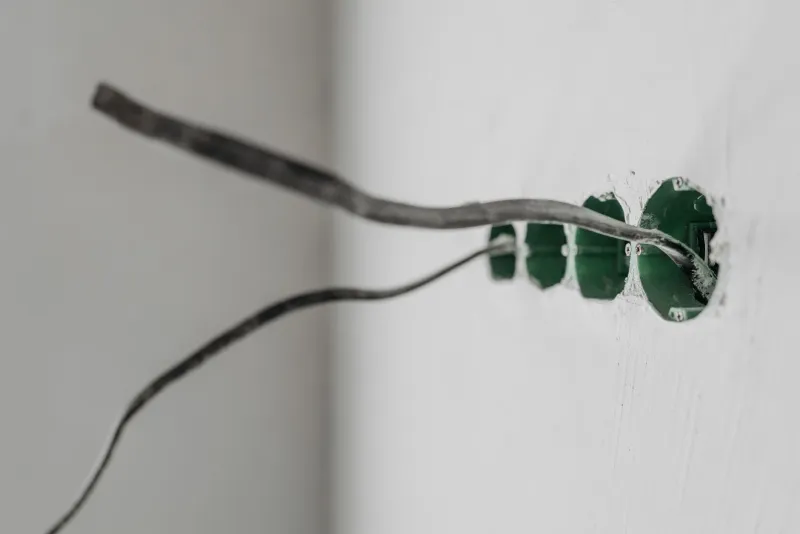
There is a particular kind of danger that earns its power from invisibility. It does not announce itself with a smell or a sound. It hides behind drywall, inside junction boxes, and beneath decades of paint. For homeowners living in properties built before 1980—and in some cases, before 2000—that danger may already be present in the form of deteriorating electrical wiring.
According to the U.S. Fire Administration, electrical fires account for tens of thousands of residential blazes each year, causing billions of dollars in property damage and claiming hundreds of lives. A significant portion of those incidents trace back not to user error, but to the wiring systems themselves. At SK Electricals, we have seen firsthand what years of deferred maintenance and outdated infrastructure can produce. The picture is rarely pretty.
The Three Most Dangerous Wiring Conditions in American Homes
Cloth-Insulated Wiring
Homes constructed in the early to mid-twentieth century were frequently wired with conductors wrapped in rubber and covered with braided cloth. At the time, this was considered adequate. Decades later, it is anything but. The rubber insulation beneath that cloth braid becomes brittle with age, cracking and crumbling under the stress of repeated heating and cooling cycles. Once the insulation fails, bare conductors can come into contact with wood framing, insulation batts, and other combustible materials.
Knob-and-tube wiring—a related system common in homes built before 1950—presents an additional concern. It was designed without a ground conductor, meaning there is no safety pathway for fault currents. Connecting modern three-prong devices to an ungrounded system creates a false sense of security while leaving the occupants genuinely exposed.
Aluminum Branch Circuit Wiring
During the 1960s and into the mid-1970s, rising copper prices prompted widespread adoption of aluminum wiring for residential branch circuits. Millions of homes across the country were wired this way. The problem is that aluminum expands and contracts at a different rate than copper, and it oxidizes in a way that increases electrical resistance at connection points. Over time, these connections loosen, arcing occurs, and heat builds up in ways that are difficult to detect until a fire starts.
Homeowners with aluminum wiring are not automatically in immediate danger, but they do require specific attention. Outlets, switches, and fixtures must be rated for aluminum conductors—and in many older installations, they simply are not. Insurance companies have taken note. A number of major carriers either refuse to cover homes with aluminum branch circuit wiring or charge significantly elevated premiums.
Undersized and Overloaded Circuits
A home wired in 1965 was designed to power a refrigerator, a few lamps, a television, and perhaps a window air conditioning unit. It was not designed to simultaneously charge two electric vehicles, power a home office with multiple monitors, run a modern kitchen loaded with high-draw appliances, and support a whole-home entertainment system.
When the electrical load on a circuit exceeds its rated capacity on a regular basis, the wiring heats up. Breakers that trip repeatedly are not a nuisance—they are a warning. Worse, breakers that have been replaced with higher-amperage units to stop the tripping without addressing the underlying load issue represent one of the most dangerous field modifications a homeowner can make.
Warning Signs You Should Not Dismiss
Not every electrical problem announces itself as a sparking outlet or a tripped breaker. Some of the most telling indicators are subtle:
- Flickering or dimming lights, particularly when appliances cycle on, may point to loose connections or an overtaxed panel.
- Warm or discolored outlet and switch plates suggest heat is being generated where it should not be.
- A persistent burning smell with no identifiable source is a serious red flag that warrants immediate professional attention.
- Breakers that trip frequently under ordinary household loads indicate a circuit that is undersized for current usage patterns.
- Two-prong outlets throughout the home are a reliable indicator of an older, ungrounded system.
- A panel brand flagged for safety issues—including certain legacy brands that have been subject to recall discussions—deserves a professional evaluation.
If your home was built before 1980 and has not had a comprehensive electrical inspection in the past decade, the absence of visible symptoms does not mean the system is sound.
Why Insurers Are Paying Attention
Homeowners insurance is, among other things, a pricing mechanism for risk. When underwriters assess a property with knob-and-tube or aluminum branch circuit wiring, they are looking at a statistically elevated likelihood of a claim. Several major insurers have made their positions clear: coverage may be denied, non-renewed, or priced at a premium for homes with these systems.
For homeowners preparing to sell, this creates a practical problem as well. Buyers conducting due diligence and their lenders are increasingly attentive to electrical system condition. An outdated wiring system can complicate financing, reduce buyer confidence, and affect final sale price.
The Case for a Professional Electrical Safety Audit
The single most effective step a homeowner can take is scheduling a comprehensive electrical safety inspection with a licensed electrical contractor. A qualified inspector will evaluate the service panel, assess the condition of visible wiring, test outlets for proper grounding and polarity, identify overloaded circuits, and flag any conditions that represent immediate or elevated risk.
From that baseline assessment, remediation can be prioritized. Not every older home requires a complete rewire. In many cases, targeted interventions—replacing aluminum connections with proper anti-oxidant compound and rated devices, installing arc-fault circuit interrupters (AFCIs) on vulnerable circuits, or upgrading specific panels—can substantially reduce risk at a manageable cost.
At SK Electricals, our licensed electricians conduct thorough evaluations designed to give homeowners a clear, honest picture of their system's condition. We do not traffic in alarm. We provide information, options, and the professional workmanship to address whatever we find.
Taking Action Before the Problem Takes Action First
The electrical systems in America's older housing stock represent one of the most underappreciated safety challenges homeowners face. The danger is not theoretical. It is present in attics and crawl spaces and wall cavities across the country, aging quietly and waiting for the conditions that allow a small problem to become a large one.
If there is any uncertainty about the age, condition, or adequacy of your home's wiring, the time to address it is before an incident—not after. Reach out to SK Electricals to schedule a professional electrical safety audit. It is the kind of investment that does not show up on a renovation tour, but it may be the most important one you ever make.