A Label Is Not a Listing: The Counterfeit Breaker Problem Hiding Inside American Load Centers
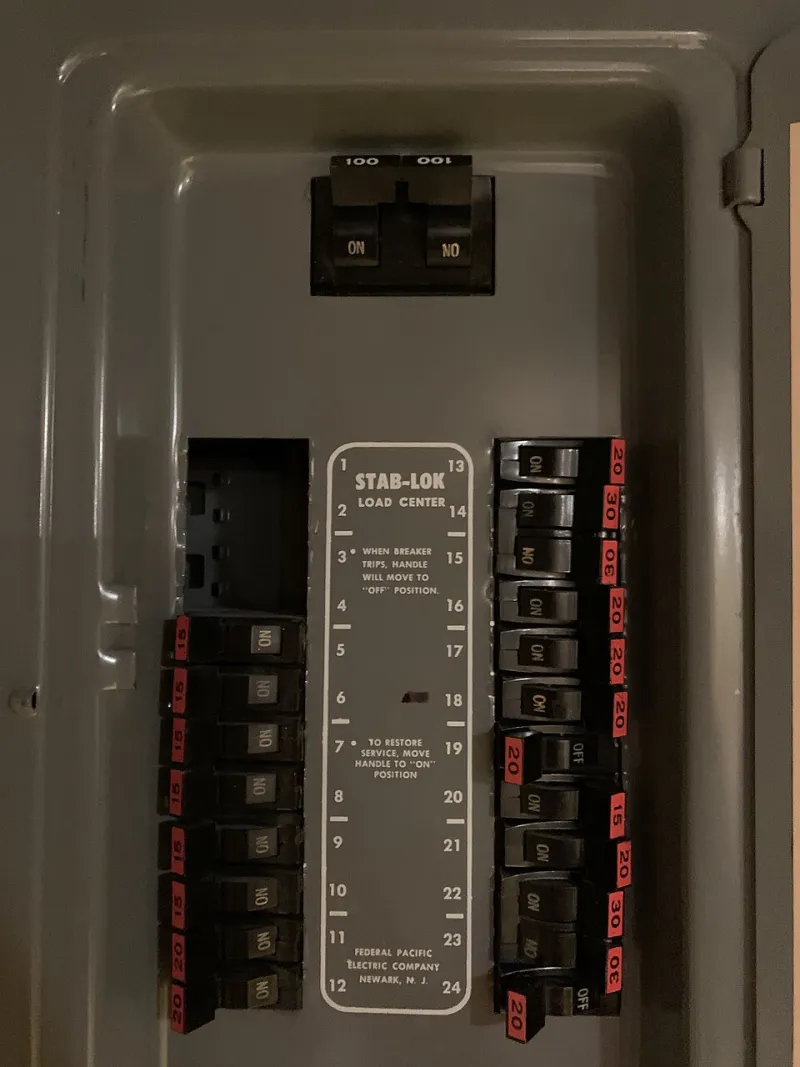
Photo: Repeater-reclaim, CC BY-SA 4.0, via Wikimedia Commons
The circuit breaker is the least visible safety device in an American home and the one most often taken entirely on faith. Homeowners will spend an afternoon comparing water heaters and five minutes glancing at a panel; contractors working against a schedule will install whatever breaker is on the truck. Neither habit is unreasonable, until the device in the panel turns out to be counterfeit and the assumption that it will open under fault current turns out to be a fiction. The trade in counterfeit and mislabeled electrical components has grown alongside online retail, and the load center is now one of the places where that trade quietly lands.
A Supply Chain Without a Front Door
For most of the postwar era, a residential breaker reached a home through a distributor with a counter, a catalog, and an account with the manufacturer. That channel still exists and still works. It is simply no longer the only one. Third-party sellers on general marketplaces, liquidation jobbers, auction listings, and unbranded import sites now offer breakers, receptacles, ground-fault devices, and wiring accessories at discounts that should prompt a question.
Some of that inventory is genuine surplus. Some is gray-market product manufactured for a different country's grid and never evaluated for the North American market. Some is outright counterfeit: a copy of a recognized brand, molded to seat on the same bus, wearing a fabricated certification mark. The counterfeit rarely announces itself. It arrives in packaging that photographs well, with a label that mimics a hologram and a catalog number that closely resembles a real one.
What a Counterfeit Looks Like Once It Is in Your Hand
- Marking. Genuine devices typically carry the manufacturer's name and catalog number molded into the case, not only printed on a label. Counterfeits often rely on stickers, because cutting a new mold is expensive.
- Weight and material. Under-filled or recycled plastic, thinner bus stabs, and a lighter overall case are common. A breaker that feels insubstantial next to a known-genuine unit of the same rating deserves scrutiny.
- Fit. A counterfeit may seat on the bus but require abnormal force, or grip loosely. Loose contact is not a cosmetic issue. It is resistance, and resistance is heat.
- Documentation. Instruction sheets with typographical errors, torque figures in metric units only, or no torque specification at all are warning signs.
- Listing language. The phrase UL-approved has no technical meaning. Devices are listed, classified, or recognized. A mark that is slightly the wrong shape, the wrong color, or accompanied by an unverifiable file number is not a mark at all.
The Listing Question Nobody Asks
There is a second problem that has nothing to do with counterfeiting and everything to do with the same outcome. A circuit breaker must be listed for installation in the panelboard it is installed in. Panelboards and breakers are evaluated as systems, and installing a breaker from one manufacturer into another manufacturer's load center generally voids the listing of both unless the combination has been specifically classified for that use.
Contractors sometimes treat bus compatibility as a mechanical question: it fits, therefore it works. It is not a mechanical question. The available fault current at a residential service can be substantial, and the breaker's ability to interrupt that current safely was demonstrated in a laboratory with a specific panel, a specific bus, and a specific set of test conditions. Remove any of those and the demonstration no longer applies.
Why a Fake Fails Differently Than an Old One
An aging breaker that has drifted out of calibration is a problem of degree. A counterfeit is a problem of kind. Inside a genuine thermal-magnetic breaker are a calibrated bimetal, a magnetic trip assembly, an arc chute designed to split and cool the arc, and contacts made of alloys selected to survive repeated interruption. A counterfeit may contain rough approximations of some of these and none of others.
The consequences fall into two categories. The first is failure to trip: an overload that should open the circuit in seconds instead lets conductors run hot inside a wall. The second is failure to interrupt: at high fault current the contacts weld, the arc chute cannot contain the arc, and the device becomes a conductor at the exact moment it is needed to be a barrier. Counterfeit ground-fault and arc-fault devices add a third category, because a test button connected to nothing and a self-test circuit that is really a timer will both report success while providing no protection whatsoever.
A Field Check That Takes Five Minutes
- Verify the file number in the manufacturer's public listing database, which UL Solutions and other recognized testing laboratories maintain at no cost. If the number does not resolve to the manufacturer and product type, stop.
- Compare the catalog number against the manufacturer's current catalog. Numbers that do not exist, or that were discontinued years ago and are now widely available at a steep discount, warrant caution.
- Inspect the device rather than the box: molded name, wiring diagram, torque value, and the shape of the certification mark.
- Compare packaging details for consistency in fonts, addresses, and units of measure.
- Photograph the device and retain the invoice with lot and date codes. Traceability is the only defense that survives a failure.
Procurement Discipline for Supply Houses and Installers
Reputable distributors carry a specific liability that marketplace sellers often do not, and they should act like it. Buy from authorized channels and request a certificate of authenticity for large lots. Quarantine returns rather than returning them to the shelf, because counterfeit product re-enters the market through returns more often than through any other route. Train counter staff to recognize the brands they sell most, and keep a known-genuine sample on hand for comparison. Put the policy in writing, because a documented procedure is both a control and a defense. Report suspected counterfeits to the manufacturer's brand protection team and to the Consumer Product Safety Commission.
What a Homeowner Can Reasonably Ask
A homeowner does not need to become an inspector. They need to ask three questions and accept only documented answers. Who supplied this device, and can I see the invoice? Was the work permitted and inspected? Is the breaker listed for this panel? The answers take a minute to give. A supplier or installer who cannot give them is telling you something.
The breaker in your panel has one job, and it performs that job on the worst day of the home's electrical life. It is worth knowing exactly what it is.