Who Pays When the Lights Go Out? A Business Owner's Guide to Commercial Electrical Responsibility
You sign a lease, move your business in, and spend the first weeks making the space your own. Then, three months later, a circuit breaker trips repeatedly during your busiest afternoon, or the lighting in your retail floor flickers unpredictably, or an inspector flags an electrical violation during a routine visit. The immediate question—who is responsible for fixing this?—rarely has a simple answer.
For the majority of small business owners leasing commercial space across the United States, the division of electrical responsibility between landlord and tenant is poorly understood and, in many cases, poorly negotiated. The consequences of that ambiguity can be significant: unexpected repair costs, operational disruptions, insurance complications, and, in serious cases, liability exposure for accidents or code violations. At SK Electricals, we work regularly with commercial tenants who find themselves navigating these questions under pressure. This guide is intended to help business owners understand the landscape before a problem forces the issue.
The Baseline: What Lease Agreements Actually Say (and Don't Say)
In residential rentals, landlord responsibility for basic habitability—including functional electrical systems—is broadly protected by law across most states. Commercial leases operate under a different framework. Courts generally treat commercial tenants as sophisticated parties capable of negotiating their own terms, which means statutory protections are far more limited.
What governs electrical responsibility in a commercial space is, in most cases, the specific language of your lease. Common structures include:
Gross leases typically place more maintenance responsibility on the landlord, including major building systems. However, even within a gross lease, tenant-installed equipment, tenant modifications, and damage caused by tenant operations are almost universally the tenant's responsibility.
Triple net (NNN) leases shift a significant portion of building maintenance costs—including electrical system upkeep—directly to the tenant. Under a triple net arrangement, a business owner may be responsible for repairs to electrical infrastructure serving their space, even if that infrastructure predates their tenancy.
Modified gross leases fall somewhere between these two models, with specific responsibilities allocated through negotiation.
The critical point is this: without reviewing your specific lease carefully, you cannot assume your landlord is obligated to address an electrical problem in your space. Many business owners discover this only after the fact.
Identifying Electrical Issues That Likely Fall on Your Shoulders
Regardless of lease structure, certain categories of electrical problems are almost universally the commercial tenant's responsibility.
Tenant-installed equipment and modifications. If your business installed additional outlets, upgraded lighting, added a subpanel, or modified the electrical system in any way during your tenancy, the systems you touched are your responsibility to maintain and repair.
Overloaded circuits caused by your operations. A commercial space leased to a restaurant, salon, medical office, or manufacturing business places demands on electrical infrastructure that a standard office tenant would not. If your equipment is causing circuit overloads or panel stress, the cause—and the obligation to address it—typically rests with your business.
Code violations tied to your improvements. If a building inspector identifies a violation in work your business commissioned, correcting that violation is your financial obligation, regardless of whether the original work was performed by a licensed contractor.
Damage resulting from your negligence. Water damage to electrical systems from a plumbing incident in your space, damage from equipment installation, or misuse of electrical infrastructure all fall squarely on the tenant.
What Landlords Are Typically Responsible For—And How to Enforce It
While commercial tenants carry substantial responsibility, landlords are generally obligated to maintain the structural and base building electrical systems—the service entrance, the main distribution panel, the wiring that existed at the time of lease execution—in a condition that meets applicable building codes.
The challenge is enforcement. When a landlord is slow to respond to a legitimate maintenance request, business owners have several options:
- Document everything in writing. Verbal conversations carry little weight in a dispute. Every maintenance request should be submitted in writing, with a clear description of the issue and the date reported. Email provides an automatic timestamp and paper trail.
- Reference your lease explicitly. When requesting repairs, cite the specific lease clause that assigns responsibility to the landlord. This signals that you understand your rights and are prepared to pursue them formally if necessary.
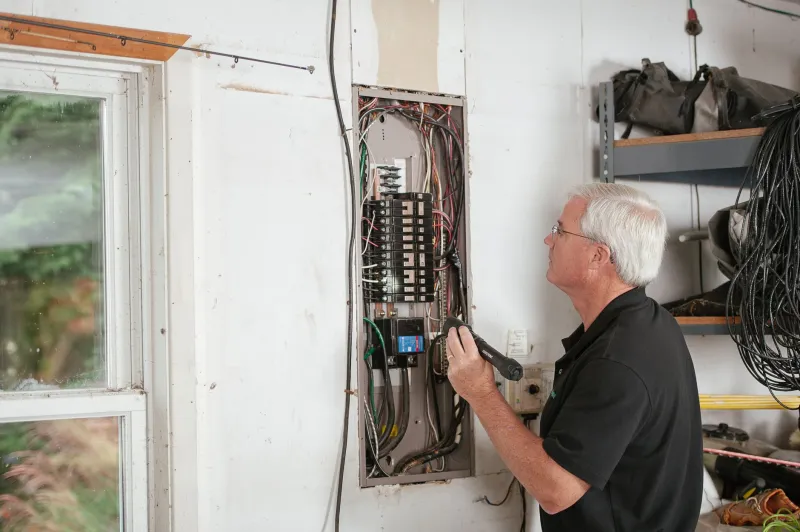
- Engage a licensed electrician for an independent assessment. A written report from a qualified electrical contractor documenting the nature, location, and probable cause of an electrical problem is a powerful document in a landlord dispute—or in any subsequent legal or insurance proceeding.
Negotiating Electrical Protections Before You Sign
The most effective time to address electrical responsibility is before the lease is executed. Business owners with sufficient negotiating leverage—or simply the awareness to ask—can secure meaningful protections through lease language.
Request a pre-lease electrical inspection. Before signing, engage a licensed electrician to assess the condition of the electrical system serving the space. Any deficiencies identified should be corrected by the landlord prior to occupancy, or the cost of correction should be reflected in negotiated rent concessions. Document the pre-existing condition in writing as part of the lease record.
Define "tenant improvements" precisely. Vague lease language about tenant modifications creates ambiguity about future maintenance responsibility. Negotiate clear definitions of what constitutes a tenant improvement, who is responsible for maintaining it, and what happens to those improvements at lease end.
Include an electrical adequacy clause. For businesses with specific power requirements—restaurants, medical practices, technology companies—negotiate a clause confirming that the existing electrical service is adequate for your intended use, and that the landlord is responsible for any upgrades necessary to meet that standard.
Address code compliance explicitly. Specify in the lease which party bears responsibility for bringing the electrical system into compliance if new codes are enacted during the lease term. This is particularly relevant for longer-term leases in jurisdictions that periodically update their electrical codes.
The Role of a Licensed Electrician in Protecting Your Business
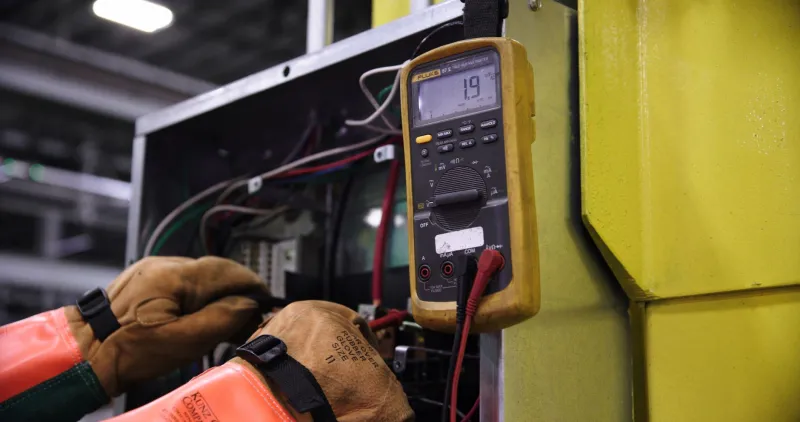
Beyond repairs and installations, a licensed commercial electrician serves as a critical documentation resource for business owners navigating lease disputes or preparing for inspections. Professional electrical assessments produce written records that can establish the condition of a system at a specific point in time—evidence that proves invaluable when responsibility is contested.
At SK Electricals, we routinely assist commercial clients with pre-occupancy assessments, code compliance evaluations, and documentation of electrical conditions for lease negotiations and insurance purposes. Engaging a qualified electrician before a problem escalates is invariably less costly than responding to one after it has.
For business owners currently operating in leased commercial space without a clear understanding of their electrical obligations, a practical first step is straightforward: pull out your lease, read the maintenance and repair provisions carefully, and consider scheduling a professional assessment of your electrical system. The time you invest in that process now is time you won't spend arguing over responsibility when the lights go out at the worst possible moment.